


- Afhalen na 1 uur in een winkel met voorraad
- Gratis thuislevering in België vanaf € 30
- Ruim aanbod met 7 miljoen producten
- Afhalen na 1 uur in een winkel met voorraad
- Gratis thuislevering in België vanaf € 30
- Ruim aanbod met 7 miljoen producten





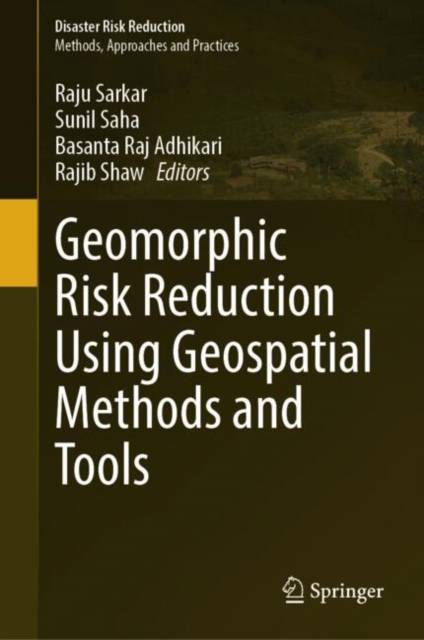
Geomorphic Risk Reduction Using Geospatial Methods and Tools
€ 259,45
+ 518 punten
Omschrijving
This book explores the use of advanced geospatial techniques in geomorphic hazards modelling and risk reduction. It also compares the accuracy of traditional statistical methods and advanced machine learning methods and addresses the different ways to reduce the impact of geomorphic hazards.
In recent years with the development of human infrastructures, geomorphic hazards are gradually increasing, which include landslides, flood and soil erosion, among others. They cause huge loss of human property and lives. Especially in mountainous, coastal, arid and semi-arid regions, these natural hazards are the main barriers for economic development. Furthermore, human pressure and specific human actions such as deforestation, inappropriate land use and farming have increased the danger of natural disasters and degraded the natural environment, making it more difficult for environmental planners and policymakers to develop appropriate long-term sustainability plans. The most challenging task is to develop a sophisticated approach for continuous inspection and resolution of environmental problems for researchers and scientists. However, in the past several decades, geospatial technology has undergone dramatic advances, opening up new opportunities for handling environmental challenges in a more comprehensive manner.
With the help of geographic information system (GIS) tools, high and moderate resolution remote sensing information, such as visible imaging, synthetic aperture radar, global navigation satellite systems, light detection and ranging, Quickbird, Worldview 3, LiDAR, SPOT 5, Google Earth Engine and others deliver state-of-the-art investigations in the identification of multiple natural hazards. For a thorough examination, advanced computer approaches focusing on cutting-edge data processing, machine learning and deep learning may be employed. To detect and manage various geomorphic hazards and their impact, several models with a specific emphasis on natural resources and the environment may be created.
In recent years with the development of human infrastructures, geomorphic hazards are gradually increasing, which include landslides, flood and soil erosion, among others. They cause huge loss of human property and lives. Especially in mountainous, coastal, arid and semi-arid regions, these natural hazards are the main barriers for economic development. Furthermore, human pressure and specific human actions such as deforestation, inappropriate land use and farming have increased the danger of natural disasters and degraded the natural environment, making it more difficult for environmental planners and policymakers to develop appropriate long-term sustainability plans. The most challenging task is to develop a sophisticated approach for continuous inspection and resolution of environmental problems for researchers and scientists. However, in the past several decades, geospatial technology has undergone dramatic advances, opening up new opportunities for handling environmental challenges in a more comprehensive manner.
With the help of geographic information system (GIS) tools, high and moderate resolution remote sensing information, such as visible imaging, synthetic aperture radar, global navigation satellite systems, light detection and ranging, Quickbird, Worldview 3, LiDAR, SPOT 5, Google Earth Engine and others deliver state-of-the-art investigations in the identification of multiple natural hazards. For a thorough examination, advanced computer approaches focusing on cutting-edge data processing, machine learning and deep learning may be employed. To detect and manage various geomorphic hazards and their impact, several models with a specific emphasis on natural resources and the environment may be created.
Specificaties
Betrokkenen
- Uitgeverij:
Inhoud
- Aantal bladzijden:
- 325
- Taal:
- Engels
- Reeks:
Eigenschappen
- Productcode (EAN):
- 9789819977062
- Verschijningsdatum:
- 5/05/2024
- Uitvoering:
- Hardcover
- Formaat:
- Genaaid
- Afmetingen:
- 156 mm x 234 mm
- Gewicht:
- 657 g

Alleen bij Standaard Boekhandel
+ 518 punten op je klantenkaart van Standaard Boekhandel
Cadeau

AANGERADEN


Beoordelingen
We publiceren alleen reviews die voldoen aan de voorwaarden voor reviews. Bekijk onze voorwaarden voor reviews.