



- Afhalen na 1 uur in een winkel met voorraad
- In januari gratis thuislevering in België
- Ruim aanbod met 7 miljoen producten
- Afhalen na 1 uur in een winkel met voorraad
- In januari gratis thuislevering in België
- Ruim aanbod met 7 miljoen producten





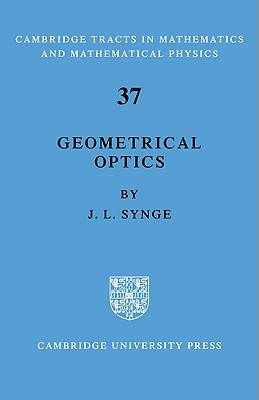
Omschrijving
It is by no means easy for the applied mathematician to decide how much importance he should attach to the more abstract and aesthetic side of his work and how much to the detailed applications to physics, astronomy, engineering or the design of instruments. To all appearances, Sir William Rowan Hamilton (1850-1865) attached little importance to the practical applications of his method, and it was only with the publication of his Mathematical Papers that it was possible to form a more correct and balanced judgement of Hamilton as an applied mathematician. Great indeed was the labour which he employed with a view to applying his method to the design of optical instruments, but for him the abstract wand aesthetic side of his work was of so much greater public importance than its practical use that the details of application remained unpublished till long after her death and long after other workers had discovered equivalent processes.
Specificaties
Betrokkenen
- Auteur(s):
- Uitgeverij:
Inhoud
- Aantal bladzijden:
- 124
- Taal:
- Engels
Eigenschappen
- Productcode (EAN):
- 9780521065900
- Verschijningsdatum:
- 2/01/1937
- Uitvoering:
- Paperback
- Formaat:
- Trade paperback (VS)
- Afmetingen:
- 140 mm x 216 mm
- Gewicht:
- 167 g


Alleen bij Standaard Boekhandel
+ 144 punten op je klantenkaart van Standaard Boekhandel
Cadeau

AANGERADEN


Beoordelingen
We publiceren alleen reviews die voldoen aan de voorwaarden voor reviews. Bekijk onze voorwaarden voor reviews.