


- Afhalen na 1 uur in een winkel met voorraad
- Gratis thuislevering in België vanaf € 30
- Ruim aanbod met 7 miljoen producten
- Afhalen na 1 uur in een winkel met voorraad
- Gratis thuislevering in België vanaf € 30
- Ruim aanbod met 7 miljoen producten





€ 389,45
+ 778 punten
Uitvoering
Omschrijving
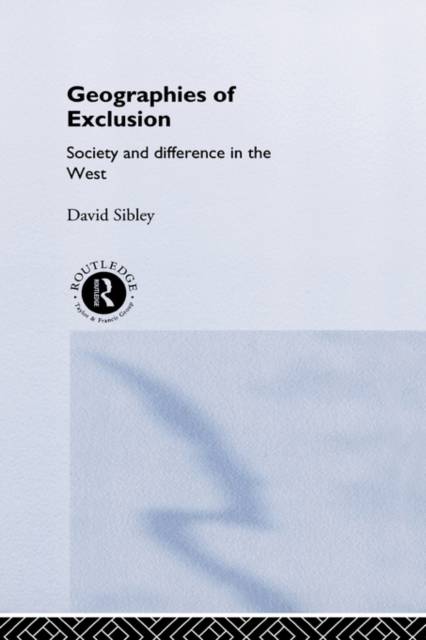
Images of exclusion characterised western cultures over long historical periods. In the developed society of racism, sexism and the marginalisation of minority groups, exclusion has become the dominant factor in the creation of social and spatial boundaries. Geographies of Exclusion seeks to identify the forms of social and spatial exclusion, and subsequently examine the fate of knowledge of space and society which has been produced by members of excluded groups. Evaluating writing on urban society by women and black writers the author asks why such work is neglected by the academic establishment, suggesting that both practices which result in the exclusion of minorities and those which result in the exclusion of knowledge have important implications for theory and method in human geography. Drawing on a wide range of ideas from social anthropology, feminist theory, sociology, human geography and psychoanalysis, the book presents a fresh approach to geographical theory, highlighting the tendency of powerful groups to purify' space and to view minorities as defiled and polluting, and exploring the nature of difference' and the production of knowledge.
Specificaties
Betrokkenen
- Auteur(s):
- Uitgeverij:
Inhoud
- Aantal bladzijden:
- 224
- Taal:
- Engels
Eigenschappen
- Productcode (EAN):
- 9780415119245
- Verschijningsdatum:
- 5/10/1995
- Uitvoering:
- Hardcover
- Formaat:
- Genaaid
- Afmetingen:
- 163 mm x 236 mm
- Gewicht:
- 612 g


Alleen bij Standaard Boekhandel
+ 778 punten op je klantenkaart van Standaard Boekhandel
Cadeau

AANGERADEN


Beoordelingen
We publiceren alleen reviews die voldoen aan de voorwaarden voor reviews. Bekijk onze voorwaarden voor reviews.