


- Afhalen na 1 uur in een winkel met voorraad
- Gratis thuislevering in België vanaf € 30
- Ruim aanbod met 7 miljoen producten
- Afhalen na 1 uur in een winkel met voorraad
- Gratis thuislevering in België vanaf € 30
- Ruim aanbod met 7 miljoen producten





€ 169,45
+ 338 punten
Omschrijving
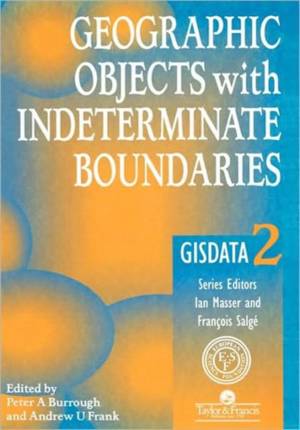
Current geographical information systems GIS deal almost exclusively with well-defined, static geographical objects ranging from physical landscapes to towns and transport systems. Such objects, exactly located in space, can easily be handled by modern GIS, yet form only a small proportion of all the possible geographical objects.; This book challenges the assumption that the world is compsed of exactly defined and bounded geographic objects such as land parcels, rivers and countries. ignoring the essential complexity of the world, current GIS do not adequately address problems as diverse as the resolution of crime between national boundaries, or the interpretation of views of people from different cultures. This work, bringing together a range of specialists from fields such as linguistics, computer science, land surveying, cartography and soil science, examines current research into the challenges of dealing with geographical phenomena that cannot easily be forced into one of the two current standard data models.
Specificaties
Betrokkenen
- Auteur(s):
- Uitgeverij:
Inhoud
- Aantal bladzijden:
- 366
- Taal:
- Engels
- Reeks:
- Reeksnummer:
- nr. 2
Eigenschappen
- Productcode (EAN):
- 9780748403875
- Verschijningsdatum:
- 7/03/1996
- Uitvoering:
- Paperback
- Formaat:
- Trade paperback (VS)
- Afmetingen:
- 171 mm x 243 mm
- Gewicht:
- 630 g


Alleen bij Standaard Boekhandel
+ 338 punten op je klantenkaart van Standaard Boekhandel
Cadeau

AANGERADEN


Beoordelingen
We publiceren alleen reviews die voldoen aan de voorwaarden voor reviews. Bekijk onze voorwaarden voor reviews.