



Je cadeautjes zeker op tijd in huis hebben voor de feestdagen? Kom langs in onze winkels en vind het perfecte geschenk!
- Afhalen na 1 uur in een winkel met voorraad
- Gratis thuislevering in België vanaf € 30
- Ruim aanbod met 7 miljoen producten
Je cadeautjes zeker op tijd in huis hebben voor de feestdagen? Kom langs in onze winkels en vind het perfecte geschenk!
- Afhalen na 1 uur in een winkel met voorraad
- Gratis thuislevering in België vanaf € 30
- Ruim aanbod met 7 miljoen producten





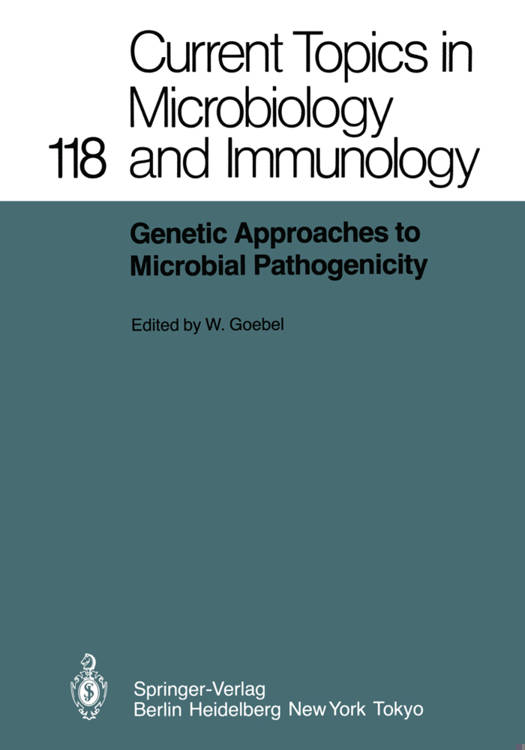
Genetic Approaches to Microbial Pathogenicity
€ 159,95
+ 319 punten
Omschrijving
Important progress in the elucidation of the mechanisms influencing bacterial pathogenicity has recently been made through the introduction of modem genetic techniques. Molecular cloning allows the isolation of genes for pheno- types that epidemiological surveys have suggested play an important role in pathogenesis. The structural analysis of determinants for pathogenic traits can lead to the identifica- tion not only of the primary sequence but also of the possi- ble secondary and tertiary structures for important viru- lence factors such as toxins and adhesins. From these data, the prediction of antigenic domains suitable for the devel- opment of new vaccines appears to be feasible. The regula- tion of virulence determinants by endogenous and exoge- nous factors can be more clearly understood through the functional analysis of the cloned virulence genes. This volume surveys representative virulence properties of gram-positive and gram-negative bacteria to which the genetic approach has been successfully applied. The exam- ples described here include important bacterial toxins (e.g., diphtheria toxin, cholera toxin, toxic shock syndrome toxin, hemolysins), adhesion structures from E. coli and Neisseria gonorrhoeae, and factors supporting iron uptake, serum resistance, and invasiveness in a variety of bacteria. Both the present state and the possible futural develop- ments of these systems are described.
Specificaties
Betrokkenen
- Uitgeverij:
Inhoud
- Aantal bladzijden:
- 284
- Taal:
- Engels
- Reeks:
- Reeksnummer:
- nr. 118
Eigenschappen
- Productcode (EAN):
- 9783642705885
- Verschijningsdatum:
- 6/12/2011
- Uitvoering:
- Paperback
- Formaat:
- Trade paperback (VS)
- Afmetingen:
- 170 mm x 244 mm
- Gewicht:
- 480 g

Alleen bij Standaard Boekhandel
+ 319 punten op je klantenkaart van Standaard Boekhandel
CADEAU


Beoordelingen
We publiceren alleen reviews die voldoen aan de voorwaarden voor reviews. Bekijk onze voorwaarden voor reviews.