



Je cadeautjes zeker op tijd in huis hebben voor de feestdagen? Kom langs in onze winkels en vind het perfecte geschenk!
- Afhalen na 1 uur in een winkel met voorraad
- Gratis thuislevering in België vanaf € 30
- Ruim aanbod met 7 miljoen producten
Je cadeautjes zeker op tijd in huis hebben voor de feestdagen? Kom langs in onze winkels en vind het perfecte geschenk!
- Afhalen na 1 uur in een winkel met voorraad
- Gratis thuislevering in België vanaf € 30
- Ruim aanbod met 7 miljoen producten





Omschrijving
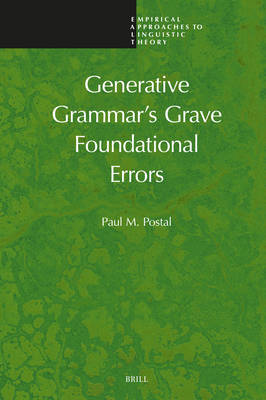
This work examines Noam Chomsky's widely accepted ontological assumptions, now referred to as "biolinguistics"--and demonstrates that they are internally inconsistent. Notably, it is shown that Chomsky himself has at least once admitted this flaw.
Additionally, the volume challenges a fundamental assumption from Chomsky's 1950s linguistic writings. This is the claim that the grammars of natural languages, particularly of English, must be constructive (proof-theoretic) devices, usually called generative grammars. It is shown that this persistent view cannot in principal account for a multitude of linguistic structures realized as perfectly natural sentences.
Finally, the work scrutinizes Chomsky's frequent assertion that "there is essentially only one language spoken on Earth," revealing it to have no actual substance.
The exposition of these flaws calls for a reassessment of fundamental aspects of generative linguistics.
Additionally, the volume challenges a fundamental assumption from Chomsky's 1950s linguistic writings. This is the claim that the grammars of natural languages, particularly of English, must be constructive (proof-theoretic) devices, usually called generative grammars. It is shown that this persistent view cannot in principal account for a multitude of linguistic structures realized as perfectly natural sentences.
Finally, the work scrutinizes Chomsky's frequent assertion that "there is essentially only one language spoken on Earth," revealing it to have no actual substance.
The exposition of these flaws calls for a reassessment of fundamental aspects of generative linguistics.
Specificaties
Betrokkenen
- Auteur(s):
- Uitgeverij:
Inhoud
- Aantal bladzijden:
- 204
- Taal:
- Engels
- Reeks:
- Reeksnummer:
- nr. 27
Eigenschappen
- Productcode (EAN):
- 9789004730915
- Verschijningsdatum:
- 14/08/2025
- Uitvoering:
- Hardcover
- Formaat:
- Genaaid
- Afmetingen:
- 163 mm x 241 mm
- Gewicht:
- 435 g


Alleen bij Standaard Boekhandel
+ 403 punten op je klantenkaart van Standaard Boekhandel
CADEAU


Beoordelingen
We publiceren alleen reviews die voldoen aan de voorwaarden voor reviews. Bekijk onze voorwaarden voor reviews.