


- Afhalen na 1 uur in een winkel met voorraad
- Gratis thuislevering in België vanaf € 30
- Ruim aanbod met 7 miljoen producten
- Afhalen na 1 uur in een winkel met voorraad
- Gratis thuislevering in België vanaf € 30
- Ruim aanbod met 7 miljoen producten





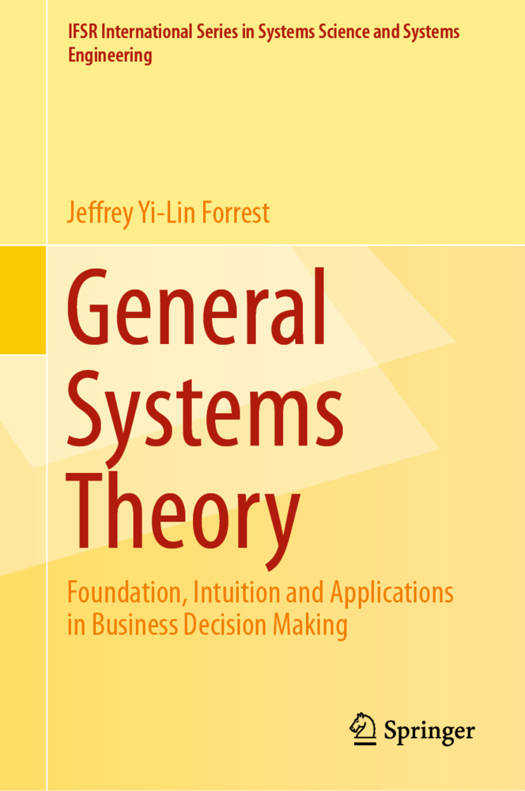
General Systems Theory
Foundation, Intuition and Applications in Business Decision Making
Jeffrey Yi-Lin Forrest
€ 140,95
+ 281 punten
Eenvoudig bestellen
Veilig betalen


Gratis thuislevering vanaf € 30 (via bpost)
Gratis levering in je Standaard Boekhandel
Omschrijving
This book demonstrates the theoretical value and practical significance of systems science and its logic of thinking by presenting a rigorously developed foundation—a tool for intuitive reasoning, which is supported by both theory and empirical evidence, as well as practical applications in business decision making.
Specificaties
Betrokkenen
- Auteur(s):
- Uitgeverij:
Inhoud
- Aantal bladzijden:
- 370
- Taal:
- Engels
- Reeks:
- Reeksnummer:
- nr. 32
Eigenschappen
- Productcode (EAN):
- 9783030045579
- Verschijningsdatum:
- 3/01/2019
- Uitvoering:
- Hardcover
- Formaat:
- Genaaid
- Afmetingen:
- 156 mm x 234 mm
- Gewicht:
- 730 g


Alleen bij Standaard Boekhandel
+ 281 punten op je klantenkaart van Standaard Boekhandel
CADEAU

AANGERADEN


Beoordelingen
We publiceren alleen reviews die voldoen aan de voorwaarden voor reviews. Bekijk onze voorwaarden voor reviews.