


- Afhalen na 1 uur in een winkel met voorraad
- Gratis thuislevering in België vanaf € 30
- Ruim aanbod met 7 miljoen producten
- Afhalen na 1 uur in een winkel met voorraad
- Gratis thuislevering in België vanaf € 30
- Ruim aanbod met 7 miljoen producten





€ 90,10
+ 180 punten
Omschrijving
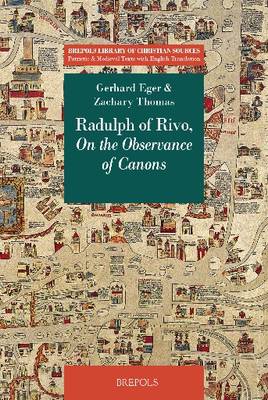
When the canons of the Congregation of Windesheim set about codifying their liturgy in the final decades of the 14th century, they had to reckon with the striking variety of customs among the different dioceses, nations, and religious orders of the Roman rite. In their perplexity, they turned to Radulph of Rivo (ca. 1350-1403), dean of the Cathedral of Tongres and canon law professor at Cologne. Radulph travelled to Rome to discover the sources of its ancient liturgy. There he was alarmed to discover that even in Rome authentic traditions had been displaced by novelties, and he accused the Franciscans specifically of unlawfully abbreviating or altering the offices. In his reply to the canons of Windesheim, entitled De canonum observantia (ca. 1403), Radulph charts a course of conservative liturgical reform that hews closely to Roman authority. He appeals to canon law, the approved uses of ancient churches and religious rites, the famous commentators, and old liturgical books he found in Rome to establish the authoritative form of Western worship. On the eve of the great changes that swept Europe in the next century, Radulph's treatise stands out as a sound guide to the riches of the Latin liturgical tradition. His conservative intervention looks forward to the work of the Tridentine liturgical commission, whose members had access to Hittorp's 1568 edition of his treatise. Our edition provides modern readers with the first English translation of Radulph's work and copious notes to illuminate this fascinating period.
Specificaties
Betrokkenen
- Auteur(s):
- Uitgeverij:
Inhoud
- Aantal bladzijden:
- 448
- Taal:
- Engels
- Reeks:
- Reeksnummer:
- nr. 16
Eigenschappen
- Productcode (EAN):
- 9782503617923
- Verschijningsdatum:
- 28/09/2025
- Uitvoering:
- Paperback
- Formaat:
- Trade paperback (VS)
- Gewicht:
- 1006 g


Alleen bij Standaard Boekhandel
+ 180 punten op je klantenkaart van Standaard Boekhandel
Cadeau

AANGERADEN


Beoordelingen
We publiceren alleen reviews die voldoen aan de voorwaarden voor reviews. Bekijk onze voorwaarden voor reviews.