


- Afhalen na 1 uur in een winkel met voorraad
- Gratis thuislevering in België vanaf € 30
- Ruim aanbod met 7 miljoen producten
- Afhalen na 1 uur in een winkel met voorraad
- Gratis thuislevering in België vanaf € 30
- Ruim aanbod met 7 miljoen producten





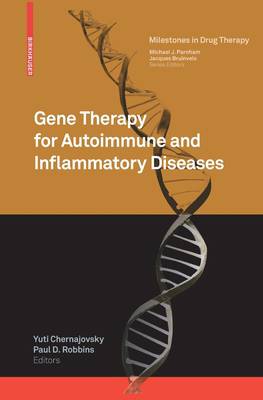
Gene Therapy for Autoimmune and Inflammatory Diseases
€ 216,95
+ 433 punten
Omschrijving
In this monograph about gene therapy of autoimmune and inflammatory d- orders we have gathered international experts and leaders from different fields to review the state of the art advances on topics ranging from disease entities to vectors and engineered cells. The different approaches described in each chapter take into consideration the biomedical knowledge of these diseases and address the complexities of delivering long-term genetic interventions. Gene therapy also serves as a testing ground for new therapeutic entities and helps provide proof of principle for their potential therapeutic role in animal models of disease. Scaling up from mice to men still remains an important h- dle not only from the quantitative point of view, but also for currently unknown and unexpected secondary effects of the vector or the transgene. Some of these approaches have already been tested in the clinic, but much more needs to be done to understand the human conditions treated and the n- ural history of their pathology. We are indebted to the secretarial assistance of Ms. Lin Wells (Bone and Joint Research Unit, London, UK) and the help of Hans Detlef Klüber for his help in getting this book published. We hope this book will be of interest to c- nicians and scientists and inspiring to students of the subject who will use their own ingenuity and knowledge to further forward this discipline into clinical use.
Specificaties
Betrokkenen
- Uitgeverij:
Inhoud
- Aantal bladzijden:
- 239
- Taal:
- Engels
- Reeks:
Eigenschappen
- Productcode (EAN):
- 9783034803069
- Verschijningsdatum:
- 1/07/2012
- Uitvoering:
- Paperback
- Formaat:
- Trade paperback (VS)
- Afmetingen:
- 165 mm x 251 mm
- Gewicht:
- 417 g

Alleen bij Standaard Boekhandel
+ 433 punten op je klantenkaart van Standaard Boekhandel
Cadeau

AANGERADEN


Beoordelingen
We publiceren alleen reviews die voldoen aan de voorwaarden voor reviews. Bekijk onze voorwaarden voor reviews.