


- Afhalen na 1 uur in een winkel met voorraad
- Gratis thuislevering in België vanaf € 30
- Ruim aanbod met 7 miljoen producten
- Afhalen na 1 uur in een winkel met voorraad
- Gratis thuislevering in België vanaf € 30
- Ruim aanbod met 7 miljoen producten





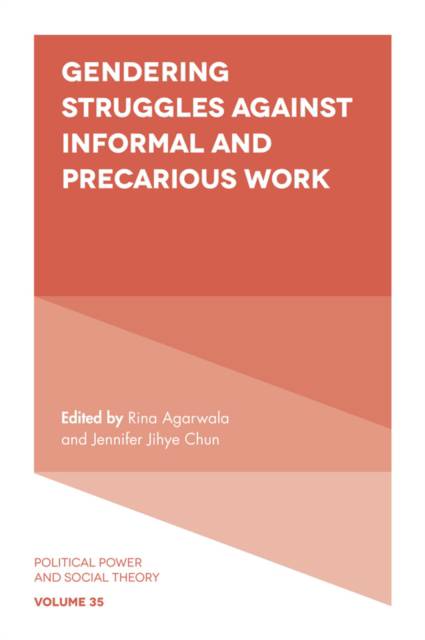
Gendering Struggles Against Informal and Precarious Work
€ 217,45
+ 434 punten
Omschrijving
Gender is a defining feature of informal/precarious work in the 21st century, yet studies rarely adopt a gendered lens when examining collective efforts to challenge informality and precarity. This volume foregrounds the gendered dimensions of informal/precarious workers' struggles as a crucial starting point for re-theorizing the future of global labor movements.
This volume includes six empirical chapters spanning five countries - the United States, Canada, South Korea, Mexico, and India - to explore exactly how gender is intertwined into informal/precarious workers organizing efforts, why gender is addressed, and to what end. The chapters focus on two gender-typed sectors - domestic work and construction - to identify the varying experiences of and struggles against gender and informality/precarity, as well as the conditions of movement success and failure. Across countries and sectors, the volume shows how informal/precarious worker organizations are on the front lines of challenging the multiple forms of gendered inequalities that shape contemporary practices of accumulation and labor regulation.
Their struggles are making major transformations in terms of increasing women's leadership and membership in labor movements and exposing how gender interacts with other ascriptive identities to shape work. They are also re-shaping hegemonic scripts of capitalist accumulation, development, and gender to attain recognition for female-dominated occupations and reproductive needs for the first time ever. These outcomes are crucial as sources of emancipatory transformations at a time when state and public support for labor and social protection is facing the deep assault of transnational production and globalizing markets.
This volume includes six empirical chapters spanning five countries - the United States, Canada, South Korea, Mexico, and India - to explore exactly how gender is intertwined into informal/precarious workers organizing efforts, why gender is addressed, and to what end. The chapters focus on two gender-typed sectors - domestic work and construction - to identify the varying experiences of and struggles against gender and informality/precarity, as well as the conditions of movement success and failure. Across countries and sectors, the volume shows how informal/precarious worker organizations are on the front lines of challenging the multiple forms of gendered inequalities that shape contemporary practices of accumulation and labor regulation.
Their struggles are making major transformations in terms of increasing women's leadership and membership in labor movements and exposing how gender interacts with other ascriptive identities to shape work. They are also re-shaping hegemonic scripts of capitalist accumulation, development, and gender to attain recognition for female-dominated occupations and reproductive needs for the first time ever. These outcomes are crucial as sources of emancipatory transformations at a time when state and public support for labor and social protection is facing the deep assault of transnational production and globalizing markets.
Specificaties
Betrokkenen
- Uitgeverij:
Inhoud
- Aantal bladzijden:
- 190
- Taal:
- Engels
- Reeks:
- Reeksnummer:
- nr. 35
Eigenschappen
- Productcode (EAN):
- 9781787693685
- Verschijningsdatum:
- 10/12/2018
- Uitvoering:
- Hardcover
- Formaat:
- Genaaid
- Afmetingen:
- 157 mm x 231 mm
- Gewicht:
- 408 g

Alleen bij Standaard Boekhandel
+ 434 punten op je klantenkaart van Standaard Boekhandel
Cadeau

AANGERADEN


Beoordelingen
We publiceren alleen reviews die voldoen aan de voorwaarden voor reviews. Bekijk onze voorwaarden voor reviews.