


- Afhalen na 1 uur in een winkel met voorraad
- Gratis thuislevering in België vanaf € 30
- Ruim aanbod met 7 miljoen producten
- Afhalen na 1 uur in een winkel met voorraad
- Gratis thuislevering in België vanaf € 30
- Ruim aanbod met 7 miljoen producten





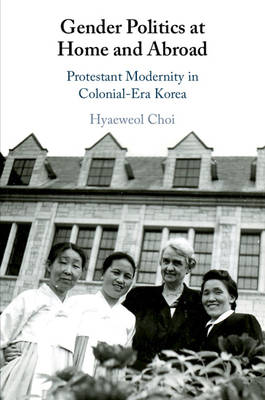
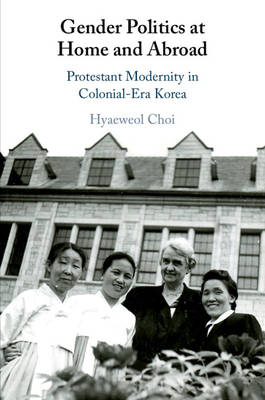
Gender Politics at Home and Abroad
Protestant Modernity in Colonial-Era Korea
Hyaeweol Choi
Paperback | Engels
€ 53,45
+ 106 punten
Omschrijving
Hyaeweol Choi examines the formation of modern gender relations in Korea from a transnational perspective. Diverging from a conventional understanding of 'secularization' as a defining feature of modernity, Choi argues that Protestant Christianity, introduced to Korea in the late nineteenth century, was crucial in shaping modern gender ideology, reforming domestic practices and claiming new space for women in the public sphere. In Korea, Japanese colonial power - and with it, Japanese representations of modernity - was confronted with the dominant cultural and material power of Europe and the US, which was reflected in Korean attitudes. One of the key agents in conveying ideas of "Western modernity" in Korea was globally connected Christianity, especially US-led Protestant missionary organizations. By placing gender and religion at the center of the analysis, Choi shows that the development of modern gender relations was rooted in the transnational experience of Koreans and not in a simple nexus of the colonizer and the colonized.
Specificaties
Betrokkenen
- Auteur(s):
- Uitgeverij:
Inhoud
- Aantal bladzijden:
- 252
- Taal:
- Engels
Eigenschappen
- Productcode (EAN):
- 9781108720281
- Verschijningsdatum:
- 20/10/2022
- Uitvoering:
- Paperback
- Formaat:
- Trade paperback (VS)
- Afmetingen:
- 152 mm x 229 mm
- Gewicht:
- 340 g


Alleen bij Standaard Boekhandel
+ 106 punten op je klantenkaart van Standaard Boekhandel
Cadeau

AANGERADEN


Beoordelingen
We publiceren alleen reviews die voldoen aan de voorwaarden voor reviews. Bekijk onze voorwaarden voor reviews.