


- Afhalen na 1 uur in een winkel met voorraad
- Gratis thuislevering in België vanaf € 30
- Ruim aanbod met 7 miljoen producten
- Afhalen na 1 uur in een winkel met voorraad
- Gratis thuislevering in België vanaf € 30
- Ruim aanbod met 7 miljoen producten





Omschrijving
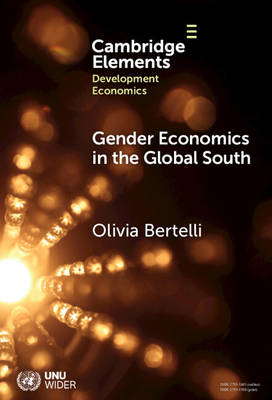
Despite past progress towards gender equality, recent trends reveal a stagnating - or even reversing - situation since 2019. According to recent estimates, full parity is to be reached in 134 years, shifting this achievement from 2030 to 2158. Women still exhibit worse conditions than men everywhere in the world, but the gender gaps are particularly stark in the global south. This Element provides an overview of cross-cutting edge research in the economics of gender inequality in the global south, while offering a snapshot of women's living conditions using recent worldwide available data. The evidence reviewed encompasses a large set of possible solutions to end gender inequality, from policy reforms to ban discriminatory practices and grant equal rights to men and women, to anti-poverty programs, as well as interventions facilitating women's access to formal education and the labor market. This title is also available as open access on Cambridge Core.
Specificaties
Betrokkenen
- Auteur(s):
- Uitgeverij:
Inhoud
- Aantal bladzijden:
- 96
- Taal:
- Engels
- Reeks:
Eigenschappen
- Productcode (EAN):
- 9781009576352
- Verschijningsdatum:
- 23/04/2026
- Uitvoering:
- Hardcover
- Formaat:
- Genaaid
- Afmetingen:
- 152 mm x 229 mm
- Gewicht:
- 299 g


Alleen bij Standaard Boekhandel
+ 248 punten op je klantenkaart van Standaard Boekhandel
Cadeau

AANGERADEN


Beoordelingen
We publiceren alleen reviews die voldoen aan de voorwaarden voor reviews. Bekijk onze voorwaarden voor reviews.