



Bedankt voor het vertrouwen het afgelopen jaar! Om jou te bedanken bieden we GRATIS verzending (in België) aan op alles gedurende de hele maand januari.
- Afhalen na 1 uur in een winkel met voorraad
- In januari gratis thuislevering in België
- Ruim aanbod met 7 miljoen producten
Bedankt voor het vertrouwen het afgelopen jaar! Om jou te bedanken bieden we GRATIS verzending (in België) aan op alles gedurende de hele maand januari.
- Afhalen na 1 uur in een winkel met voorraad
- In januari gratis thuislevering in België
- Ruim aanbod met 7 miljoen producten





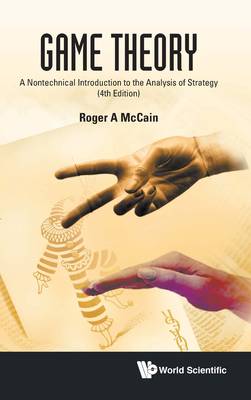
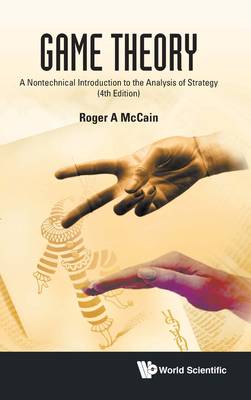
Game Theory: A Nontechnical Introduction to the Analysis of Strategy (Fourth Edition)
Roger A McCain
Hardcover | Engels
€ 166,45
+ 332 punten
Omschrijving
As with the previous editions, this fourth edition relies on teaching by example and the Karplus Learning Cycle to convey the ideas of game theory in a way that is approachable, intuitive, and interdisciplinary. Noncooperative equilibrium concepts such as Nash equilibrium, mixed strategy equilibria, and subgame perfect equilibrium are systematically introduced in the first half of the book. Bayesian Nash equilibrium is briefly introduced. The subsequent chapters discuss cooperative solutions with and without side payments, rationalizable strategies and correlated equilibria, and applications to elections, social mechanism design, and larger-scale games. New examples include panic buying, supply-chain shifts in the pandemic, and global warming.
Specificaties
Betrokkenen
- Auteur(s):
- Uitgeverij:
Inhoud
- Aantal bladzijden:
- 548
- Taal:
- Engels
Eigenschappen
- Productcode (EAN):
- 9789811262951
- Verschijningsdatum:
- 21/06/2023
- Uitvoering:
- Hardcover
- Formaat:
- Genaaid
- Afmetingen:
- 152 mm x 229 mm
- Gewicht:
- 898 g


Alleen bij Standaard Boekhandel
+ 332 punten op je klantenkaart van Standaard Boekhandel
SOLDEN


Beoordelingen
We publiceren alleen reviews die voldoen aan de voorwaarden voor reviews. Bekijk onze voorwaarden voor reviews.