



Je cadeautjes zeker op tijd in huis hebben voor de feestdagen? Kom langs in onze winkels en vind het perfecte geschenk!
- Afhalen na 1 uur in een winkel met voorraad
- Gratis thuislevering in België vanaf € 30
- Ruim aanbod met 7 miljoen producten
Je cadeautjes zeker op tijd in huis hebben voor de feestdagen? Kom langs in onze winkels en vind het perfecte geschenk!
- Afhalen na 1 uur in een winkel met voorraad
- Gratis thuislevering in België vanaf € 30
- Ruim aanbod met 7 miljoen producten





€ 232,45
+ 464 punten
Omschrijving
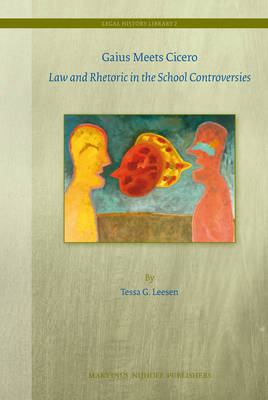
Gaius Meets Cicero. Law and Rhetoric in the School Controversies sheds new light on a much debated issue in the field of Roman law, i.e. the so-called 'school controversies' between the Sabinians and the Proculians. Tessa Leesen rejects the general assumption in modern literature that the two schools each adhered to a fundamentally different theoretical conception of law. She argues that the 'school controversies' as described in Gaius' Institutiones arose in legal practice when the heads of the two schools were consulted by two conflicting parties and each gave opposing advice. In order to make their opinions persuasive, the jurists were in need of adequate arguments. For this purpose, they made use of rhetoric and of the argumentative theory of topoi as described in Cicero's Topica.
Specificaties
Betrokkenen
- Auteur(s):
- Uitgeverij:
Inhoud
- Aantal bladzijden:
- 372
- Taal:
- Engels
- Reeks:
- Reeksnummer:
- nr. 2
Eigenschappen
- Productcode (EAN):
- 9789004187740
- Verschijningsdatum:
- 24/09/2010
- Uitvoering:
- Hardcover
- Formaat:
- Genaaid
- Afmetingen:
- 160 mm x 240 mm
- Gewicht:
- 784 g


Alleen bij Standaard Boekhandel
+ 464 punten op je klantenkaart van Standaard Boekhandel
CADEAU


Beoordelingen
We publiceren alleen reviews die voldoen aan de voorwaarden voor reviews. Bekijk onze voorwaarden voor reviews.