


- Afhalen na 1 uur in een winkel met voorraad
- Gratis thuislevering in België vanaf € 30
- Ruim aanbod met 7 miljoen producten
- Afhalen na 1 uur in een winkel met voorraad
- Gratis thuislevering in België vanaf € 30
- Ruim aanbod met 7 miljoen producten





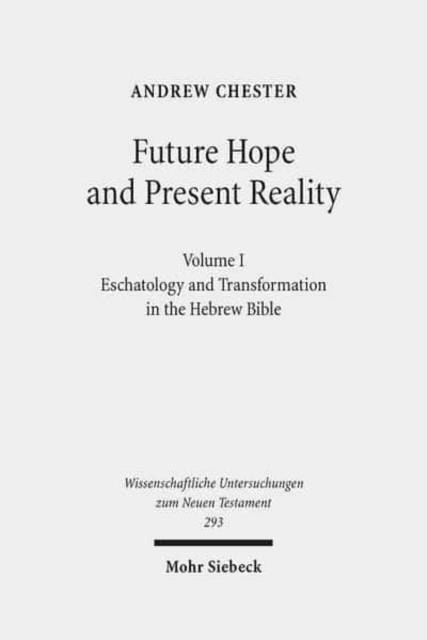
Future Hope and Present Reality
Volume I: Eschatology and Transformation in the Hebrew Bible
Andrew Chester
€ 146,45
+ 292 punten
Omschrijving
This book is the first of a two-volume work with the overall title Future Hope and Present Reality. These volumes had their origin in the Speaker's Lectures that Andrew Chester gave in Oxford; their main focus is central themes in biblical eschatology, and especially the apparent contradictions between what is hoped for in the future and what is experienced in the present: the stark discrepancy, that is, between the world as it is and the world as it should be. In this first volume, as the subtitle Eschatology and Transformation in the Hebrew Bible indicates, the author is concerned with the Hebrew Bible (or Old Testament; the second will be on the New Testament). He deals, successively, with central eschatological themes and the deep tensions they involve: divine threats of an absolute end (to human life and to the world itself), and divine promises of blessing and transformation, along with the theological questions inevitably raised by these - both in themselves and in relation to each other; the whole phenomenon of prophecy, and the problems it involves - not least, whether it can be taken seriously, in face of the contradictions and failures it manifests. He discusses the sheer discrepancy between ideal and reality in traditions relating to kingship, along with the tensions inherent in the emergence of messianic hope; death, as representing the end of any relationship with God, along with hope that goes beyond death - in relation both to the individual and also the nation; and, finally, visions of a transformed and paradisal world, and whether these can bear any relation to reality. It is argued that the Hebrew Bible can be seen to offer genuine grounds for hope, but that these can have any cogency only if the problems involved are really engaged with.
Specificaties
Betrokkenen
- Auteur(s):
- Uitgeverij:
Inhoud
- Aantal bladzijden:
- 384
- Taal:
- Engels
- Reeks:
- Reeksnummer:
- nr. 293
Eigenschappen
- Productcode (EAN):
- 9783161521966
- Verschijningsdatum:
- 31/12/2012
- Uitvoering:
- Hardcover
- Formaat:
- Genaaid
- Afmetingen:
- 157 mm x 231 mm
- Gewicht:
- 739 g


Alleen bij Standaard Boekhandel
+ 292 punten op je klantenkaart van Standaard Boekhandel
Cadeau

AANGERADEN


Beoordelingen
We publiceren alleen reviews die voldoen aan de voorwaarden voor reviews. Bekijk onze voorwaarden voor reviews.