


- Afhalen na 1 uur in een winkel met voorraad
- Gratis thuislevering in België vanaf € 30
- Ruim aanbod met 7 miljoen producten
- Afhalen na 1 uur in een winkel met voorraad
- Gratis thuislevering in België vanaf € 30
- Ruim aanbod met 7 miljoen producten





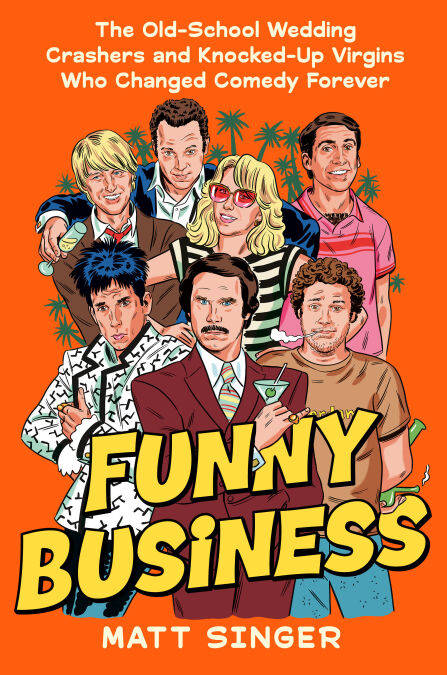
Funny Business E-BOOK
The Old-School Wedding Crashers and Knocked-Up Virgins Who Changed Comedy Forever
Matt Singer
E-book | Engels
€ 16,18
+ 16 punten
Omschrijving
A celebration of a generation of iconic comedies—the raunchy, blockbuster “Frat Pack” films of the early 2000s—and a no-holds-barred look at their rise and fall in Hollywood, the effects of which can still be felt in the fractured media landscape of today.
If you were a movie-goer in the early aughts, you had a front row seat to a golden age of comedy. Ben Stiller, Seth Rogen, Will Ferrell, Owen Wilson, Steve Carell, and Vince Vaughn became unlikely leading men—a band of rowdy wedding crashers, hungover bachelors, and 40-year-old virgins dubbed the “Frat Pack” that took Hollywood by storm over the span of a single decade. Then, seemingly overnight, Frat Pack movies vanished. Or did they?
In Funny Business, award-winning author and film critic Matt Singer traces the path these gonzo stars and directors took from the fringes of comedy to the mainstream—beginning on tiny stages like Second City and the Groundlings, then infiltrating into talent incubators like SNL, eventually leading to the big screen. Along the way, he shares insider stories of the films that raised a generation, including: The 40-Year-Old Virgin, Zoolander, Borat, Anchorman, Old School, and The Hangover.
How did these movies and their stars come to dominate a generation of moviemaking? Who won—and who was left out—of this comedy boom? And can studio comedies make a comeback in our modern digital and streaming world? Funny Business points the way forward to a (possible) new future for cinema—never forgetting that the audience always gets the last laugh.
If you were a movie-goer in the early aughts, you had a front row seat to a golden age of comedy. Ben Stiller, Seth Rogen, Will Ferrell, Owen Wilson, Steve Carell, and Vince Vaughn became unlikely leading men—a band of rowdy wedding crashers, hungover bachelors, and 40-year-old virgins dubbed the “Frat Pack” that took Hollywood by storm over the span of a single decade. Then, seemingly overnight, Frat Pack movies vanished. Or did they?
In Funny Business, award-winning author and film critic Matt Singer traces the path these gonzo stars and directors took from the fringes of comedy to the mainstream—beginning on tiny stages like Second City and the Groundlings, then infiltrating into talent incubators like SNL, eventually leading to the big screen. Along the way, he shares insider stories of the films that raised a generation, including: The 40-Year-Old Virgin, Zoolander, Borat, Anchorman, Old School, and The Hangover.
How did these movies and their stars come to dominate a generation of moviemaking? Who won—and who was left out—of this comedy boom? And can studio comedies make a comeback in our modern digital and streaming world? Funny Business points the way forward to a (possible) new future for cinema—never forgetting that the audience always gets the last laugh.
Specificaties
Betrokkenen
- Auteur(s):
- Uitgeverij:
Inhoud
- Aantal bladzijden:
- 304
- Taal:
- Engels
Eigenschappen
- Productcode (EAN):
- 9798217047956
- Verschijningsdatum:
- 5/10/2026
- Uitvoering:
- E-book
- Beveiligd met:
- Adobe DRM
- Formaat:
- ePub


Alleen bij Standaard Boekhandel
+ 16 punten op je klantenkaart van Standaard Boekhandel
Cadeau

AANGERADEN


Beoordelingen
We publiceren alleen reviews die voldoen aan de voorwaarden voor reviews. Bekijk onze voorwaarden voor reviews.