


- Afhalen na 1 uur in een winkel met voorraad
- Gratis thuislevering in België vanaf € 30
- Ruim aanbod met 7 miljoen producten
- Afhalen na 1 uur in een winkel met voorraad
- Gratis thuislevering in België vanaf € 30
- Ruim aanbod met 7 miljoen producten





€ 871,95
+ 1743 punten
Omschrijving
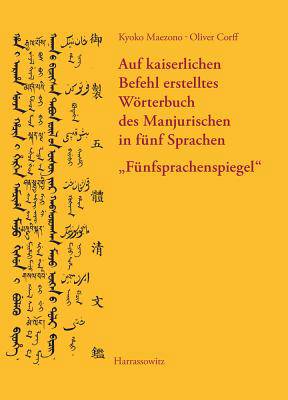
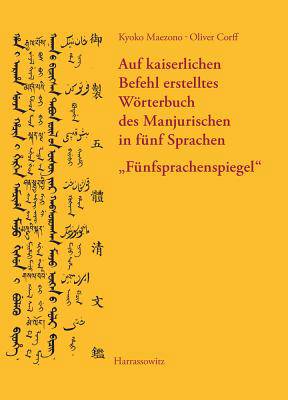
Due to the arrangement of its entries according to subject categories, the Auf kaiserlichen Befehl erstelltes Worterbuch des Manjurischen in funf Sprachen (Funfsprachenspiegel) (The Dictionary of Manchurian in Five Languages compiled on the orders of the emperor, or Compendium of Five Languages ) is impossible to use as a reference book for unknown word forms. A structured alphabetical classification of the dictionary would only ever have been able to consider one of the five languages. In order to make all of the entries in all of the languages accessible, registers have been assembled for Manchurian, Tibetan (in Romanized Tibetan script, but not for the Manchurian transcription systems), Mongolian, Turki (again for the Romanized Arabic script, but without an indication of pronunciation in Manchurian script) and Chinese (categorized in this case according to graphemes). In contrast to earlier works, the registers for the first time make it possible to look up all verbal components also of complex compounds, independent of their positioning within the catalog entry. In addition, they also make it possible to look up all of the spelling variations contained in the Beijing reprint which is based on the Chonghuagong manuscript. In particular, this work also provides an attempt to provide a complete listing of all of the different versions of Chinese characters.
Specificaties
Betrokkenen
- Auteur(s):
- Uitgeverij:
Inhoud
- Aantal bladzijden:
- 2454
- Taal:
- Duits
Eigenschappen
- Productcode (EAN):
- 9783447101554
- Verschijningsdatum:
- 1/03/2014
- Uitvoering:
- Hardcover
- Formaat:
- Genaaid
- Gewicht:
- 8191 g


Alleen bij Standaard Boekhandel
+ 1743 punten op je klantenkaart van Standaard Boekhandel

Beoordelingen
We publiceren alleen reviews die voldoen aan de voorwaarden voor reviews. Bekijk onze voorwaarden voor reviews.