


- Afhalen na 1 uur in een winkel met voorraad
- Gratis thuislevering in België vanaf € 30
- Ruim aanbod met 7 miljoen producten
- Afhalen na 1 uur in een winkel met voorraad
- Gratis thuislevering in België vanaf € 30
- Ruim aanbod met 7 miljoen producten




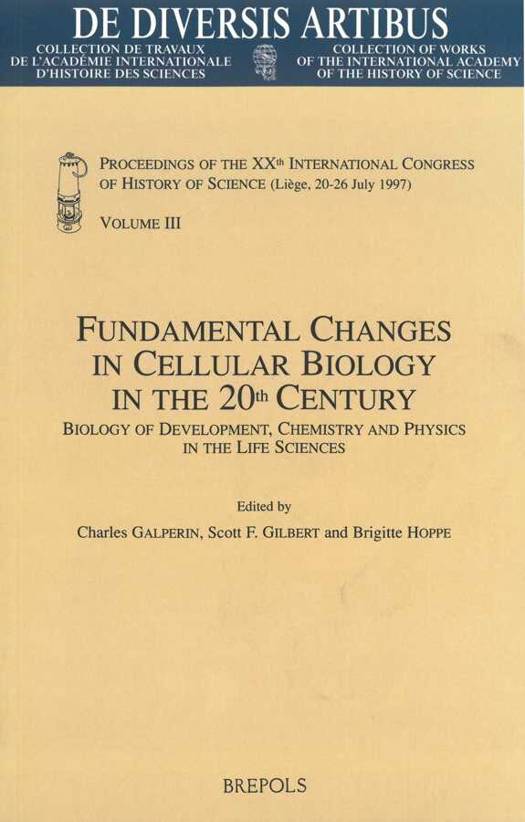
Fundamental Changes in Cellular Biology in the 20th Century. Biology of Development, Chemistry and Physics in the Life Sciences
Proceedings of the Xxth International Congress of History of Science (Liege, 20-26 July 1997) Vol. III
C. Galperin
€ 31,80
+ 63 punten
Omschrijving
This volume presents a collection of selected papers worked out for the XXth International Congress of History of Science held in July 1997 in Liege The first part analyzes interrelations between the exact sciences, chemistry and physics on the one hand, and life sciences on the other hand. It is well known that in many fields of biological sciences, mainly in those working with experimental methods, chemical and physical knowledge was integrated but the historic development of that interrelation is not yet known and cannot be explained enough in all details until the present day. By searching for the events in the past, historians of science find out that introducing physical and chemical methods and knowledge into life sciences was not a simple but very complex historical process. The second part was constructed during the centenary of E.B. Wilson's pioneering book The Cell in Development and Inheritance (1896), with an eye on this tradition of biological research. Wilson attempted to integrate cytology, embryology, and the chromosome theory of inheritance into a common cellular framework. It was only in the late 1970s that the synthesis now called cell biology, developmental biology and developmental genetics came into existence. The work carried out in Zurich under E. Hadorn's supervision was brought to light. Concepts and paths of research were defined, for example: homeosis, physiological genetics, 'body plans' allometry, homologies of process, evolution as 'bricolage' and finally a critical essay on different perspectives on development.
Specificaties
Betrokkenen
- Auteur(s):
- Uitgeverij:
Inhoud
- Aantal bladzijden:
- 180
- Taal:
- Engels
- Reeks:
- Reeksnummer:
- nr. 43
Eigenschappen
- Productcode (EAN):
- 9782503508887
- Verschijningsdatum:
- 20/12/1999
- Uitvoering:
- Paperback
- Formaat:
- Trade paperback (VS)
- Gewicht:
- 312 g


Alleen bij Standaard Boekhandel
+ 63 punten op je klantenkaart van Standaard Boekhandel
Cadeau

AANGERADEN


Beoordelingen
We publiceren alleen reviews die voldoen aan de voorwaarden voor reviews. Bekijk onze voorwaarden voor reviews.