


- Afhalen na 1 uur in een winkel met voorraad
- Gratis thuislevering in België vanaf € 30
- Ruim aanbod met 7 miljoen producten
- Afhalen na 1 uur in een winkel met voorraad
- Gratis thuislevering in België vanaf € 30
- Ruim aanbod met 7 miljoen producten





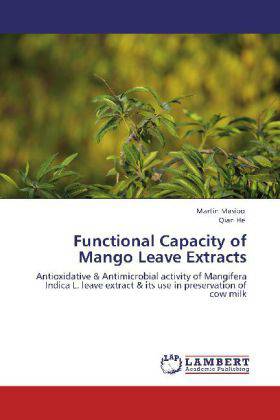
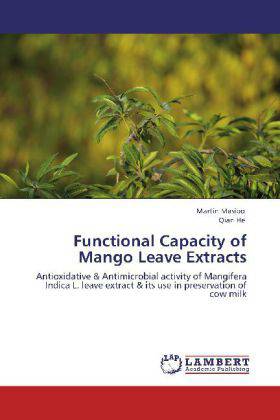
Functional Capacity of Mango Leave Extracts
Antioxidative & Antimicrobial activity of Mangifera Indica L. leave extract & its use in preservation of cow milk
Martin Masibo, Qian He
Paperback | Engels
€ 63,45
+ 126 punten
Omschrijving
The mango is a unique plant whose every part is used. Although mango leaves and stem bark are not edible, their bioactivity is highest compared to other parts. Chapter 1 reviews literature of mango phenolics and related bioactivity, their significance to human health, with emphasis on mangiferin. Chapter 2 investigates the antioxidative capacity of the extracts, the total phenolics content, and the extraction yield from different extraction regimes. Use of plant extracts as antimicrobials has gained attention over the use of synthetic antibiotics. Chapter 3 investigates the antimicrobial capacity of MLE against pathogenic and GRAS bacterial strains. By use of reversed-phase HPLC, Mangiferin was found to be the most abundant. Chapter 4 covers the hurdle effect of MLE in combination with heat in preserving milk and the eventual sensory impact on the milk. The TPC of the milk was found to be proportional to concentration of MLE, temperature and time with no impact on sensory characteristics of the milk at low concentrations. This work shows that MLE can be used as natural antioxidants, antimicrobials & fortificants to combat degenerative diseases.
Specificaties
Betrokkenen
- Auteur(s):
- Uitgeverij:
Inhoud
- Aantal bladzijden:
- 112
- Taal:
- Engels
Eigenschappen
- Productcode (EAN):
- 9783848498345
- Verschijningsdatum:
- 12/04/2012
- Uitvoering:
- Paperback
- Afmetingen:
- 152 mm x 220 mm
- Gewicht:
- 177 g


Alleen bij Standaard Boekhandel
+ 126 punten op je klantenkaart van Standaard Boekhandel
AANGERADEN


Beoordelingen
We publiceren alleen reviews die voldoen aan de voorwaarden voor reviews. Bekijk onze voorwaarden voor reviews.