


- Afhalen na 1 uur in een winkel met voorraad
- Gratis thuislevering in België vanaf € 30
- Ruim aanbod met 7 miljoen producten
- Afhalen na 1 uur in een winkel met voorraad
- Gratis thuislevering in België vanaf € 30
- Ruim aanbod met 7 miljoen producten





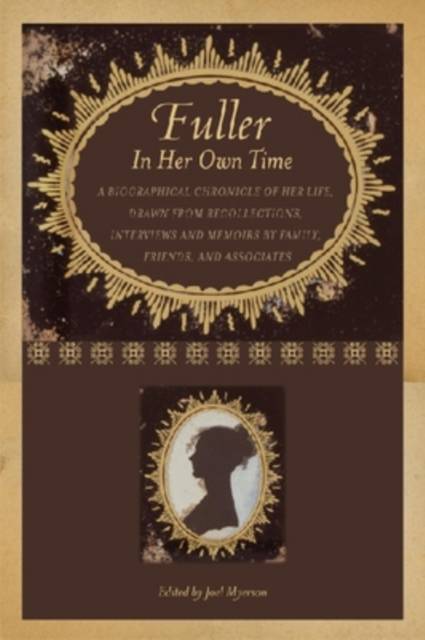
Fuller in Her Own Time
A Biographical Chronicle of Her Life, Drawn from Recollections, Interviews, and Memoirs by Family, Friends, and Associates
€ 41,45
+ 82 punten
Omschrijving
Writer, editor, journalist, educator, feminist, conversationalist, and reformer Margaret Fuller (1810-1850) was one of the leading intellectuals of nineteenth-century America as well as a prominent member of Concord literary circles. Yet the challenging spirit behind her intellectual confidence and mesmerizing energy led to the invention of an unbalanced legacy that denied her a place among the canonical Concord writers. This collection of first-hand reminiscences by those who knew Fuller personally rescues her from these confusions and provides a clearer identity for this misrepresented personality.
The forty-one remembrances from Nathaniel Hawthorne, Oliver Wendell Holmes, Ralph Waldo Emerson, Thomas Carlyle, Harriet Martineau, Henry James, and twenty-four others chart Fuller's expanding influence from schooldays in Boston, meetings at the Transcendental Club, teaching in Providence and Boston, work on the New York Tribune, publications and conversations, travels in the British Isles, and life and love in Italy before her tragic early death. Joel Myerson's perceptive introduction assesses the pre- and postmortem building of Fuller's reputation as well as her relationship to the prominent Transcendentalists, reformers, literati, and other personalities of her time, and his headnotes to each selection present valuable connecting contexts.
The woman who admitted that "at nineteen she was the most intolerable girl that ever took a seat in a drawing-room," whose Woman in the Nineteenth Century is considered the first major book-length feminist call to action in America, never conformed to nineteenth-century expectations of self-effacing womanhood. The fascinating contradictions revealed by these narratives create a lively, lifelike biography of Fuller's "rare gifts and solid acquirements . . . and unfailing intellectual sympathy."
The forty-one remembrances from Nathaniel Hawthorne, Oliver Wendell Holmes, Ralph Waldo Emerson, Thomas Carlyle, Harriet Martineau, Henry James, and twenty-four others chart Fuller's expanding influence from schooldays in Boston, meetings at the Transcendental Club, teaching in Providence and Boston, work on the New York Tribune, publications and conversations, travels in the British Isles, and life and love in Italy before her tragic early death. Joel Myerson's perceptive introduction assesses the pre- and postmortem building of Fuller's reputation as well as her relationship to the prominent Transcendentalists, reformers, literati, and other personalities of her time, and his headnotes to each selection present valuable connecting contexts.
The woman who admitted that "at nineteen she was the most intolerable girl that ever took a seat in a drawing-room," whose Woman in the Nineteenth Century is considered the first major book-length feminist call to action in America, never conformed to nineteenth-century expectations of self-effacing womanhood. The fascinating contradictions revealed by these narratives create a lively, lifelike biography of Fuller's "rare gifts and solid acquirements . . . and unfailing intellectual sympathy."
Specificaties
Betrokkenen
- Uitgeverij:
Inhoud
- Aantal bladzijden:
- 258
- Taal:
- Engels
- Reeks:
Eigenschappen
- Productcode (EAN):
- 9781587296918
- Verschijningsdatum:
- 1/08/2008
- Uitvoering:
- Paperback
- Formaat:
- Trade paperback (VS)
- Afmetingen:
- 152 mm x 226 mm
- Gewicht:
- 340 g

Alleen bij Standaard Boekhandel
+ 82 punten op je klantenkaart van Standaard Boekhandel
CADEAU

AANGERADEN


Beoordelingen
We publiceren alleen reviews die voldoen aan de voorwaarden voor reviews. Bekijk onze voorwaarden voor reviews.