


- Afhalen na 1 uur in een winkel met voorraad
- Gratis thuislevering in België vanaf € 30
- Ruim aanbod met 7 miljoen producten
- Afhalen na 1 uur in een winkel met voorraad
- Gratis thuislevering in België vanaf € 30
- Ruim aanbod met 7 miljoen producten





€ 322,45
+ 644 punten
Omschrijving
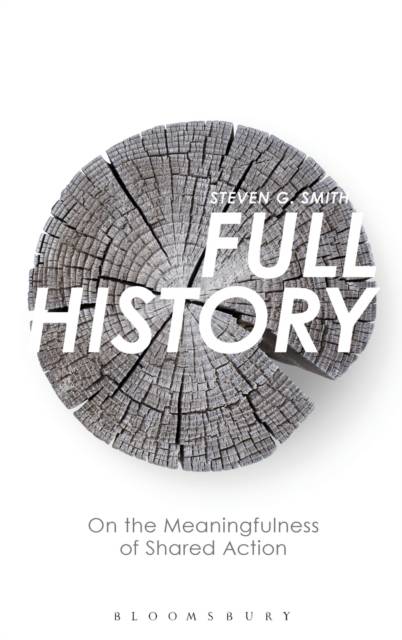
How can we take history seriously as real and relevant? Despite the hazards of politically dangerous or misleading accounts of the past, we live our lives in a great network of cooperation with other actors; past, present, and future. We study and reflect on the past as a way of exercising a responsibility for shared action.
In each of the chapters of Full History Smith poses a key question about history as a concern for conscious participants in the sharing of action, starting with "What Is Historical Meaningfulness?" and ending with "How Can History Have an Aim?" Constructing new models of historical meaning while engaging critically with perspectives offered by Ranke, Dilthey, Rickert, Heidegger, Eliade, Sartre, Foucault, and Arendt, Smith develops a philosophical account of thinking about history that moves beyond postmodernist skepticism. Full History seeks to expand the cast of significant actors, establishing an inclusive version of the historical that recognizes large-scale cumulative actions but also encourages critical revision and expansion of any paradigm of shared action.Specificaties
Betrokkenen
- Auteur(s):
- Uitgeverij:
Inhoud
- Aantal bladzijden:
- 264
- Taal:
- Engels
Eigenschappen
- Productcode (EAN):
- 9781474260329
- Verschijningsdatum:
- 12/01/2017
- Uitvoering:
- Hardcover
- Formaat:
- Genaaid
- Afmetingen:
- 157 mm x 236 mm
- Gewicht:
- 539 g


Alleen bij Standaard Boekhandel
+ 644 punten op je klantenkaart van Standaard Boekhandel
Cadeau

AANGERADEN


Beoordelingen
We publiceren alleen reviews die voldoen aan de voorwaarden voor reviews. Bekijk onze voorwaarden voor reviews.