


- Afhalen na 1 uur in een winkel met voorraad
- Gratis thuislevering in België vanaf € 30
- Ruim aanbod met 7 miljoen producten
- Afhalen na 1 uur in een winkel met voorraad
- Gratis thuislevering in België vanaf € 30
- Ruim aanbod met 7 miljoen producten





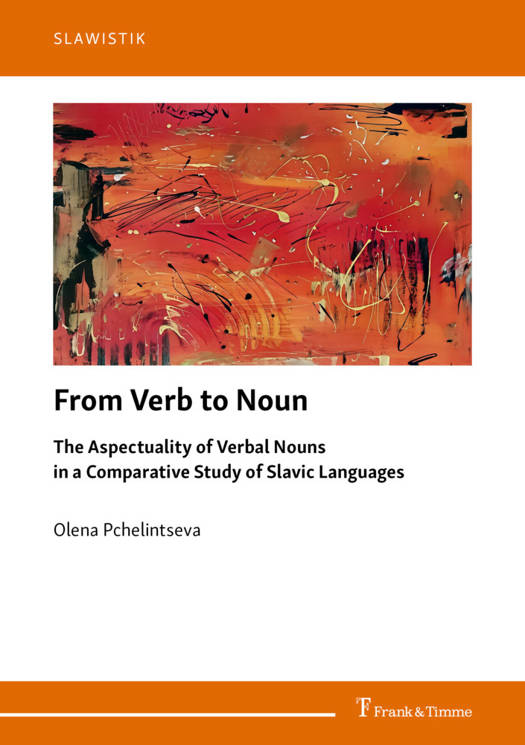
From Verb to Noun
The Aspectuality of Verbal Nouns in a Comparative Study of Slavic Languages
Olena Pchelintseva
€ 49,95
+ 99 punten
Omschrijving
So far, studies of Slavic verbal nouns have paid little attention to the aspectual categories of its subject. The author of this work wants to change this by thoroughly analyzing the aspectual features of verbal nouns in Russian, Ukrainian and Polish. In her unique approach she bases the study on extensive material of the three Slavic languages, ranging from dictionaries and other corpora on to data from linguistic surveys. The author then contrasts and compares the findings, thus identifying for all three languages the similarities and differences in their semantics as well as in their usage of this special verbal form.The book is a carefully revised version of the 2016 edition, originally published by Nauka Publishing House in St. Petersburg. It has now been translated into English in order to present its important findings to a much broader scientific community such as slavicists, aspectologists and scientists specializing in grammatical theory or linguistic typology, as well as linguistic students.
Specificaties
Betrokkenen
- Auteur(s):
- Uitgeverij:
Inhoud
- Taal:
- Engels
- Reeks:
- Reeksnummer:
- nr. 14
Eigenschappen
- Productcode (EAN):
- 9783732911714
- Uitvoering:
- Paperback
- Afmetingen:
- 148 mm x 16 mm
- Gewicht:
- 398 g


Alleen bij Standaard Boekhandel
+ 99 punten op je klantenkaart van Standaard Boekhandel
Cadeau

AANGERADEN


Beoordelingen
We publiceren alleen reviews die voldoen aan de voorwaarden voor reviews. Bekijk onze voorwaarden voor reviews.