



- Afhalen na 1 uur in een winkel met voorraad
- In januari gratis thuislevering in België
- Ruim aanbod met 7 miljoen producten
- Afhalen na 1 uur in een winkel met voorraad
- In januari gratis thuislevering in België
- Ruim aanbod met 7 miljoen producten





€ 5,99
+ 5 punten
Omschrijving
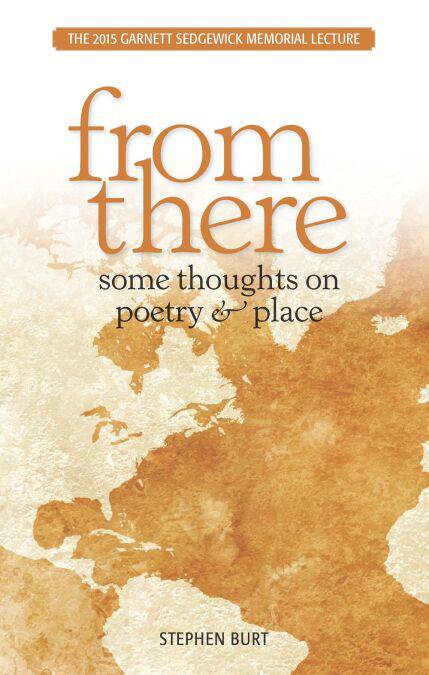
In his 2015 Garnett Sedgewick lecture, award-winning poet and literary critic Stephen Burt discusses the relation of poetry to time, space and place. He examines the widespread and popular view of contemporary critics who claim that modern lyric poetry is supposed to have a speaking self who resides outside of space and time, and addresses readers who do not care who or where they are. In other words, place or the “there” of the poems is supposed to have no importance to the lyric voice. But taking his examples from Chaucer onwards through Shakespeare, the landscape poets of the eighteenth century, and Wordsworth, along with a number of prominent Canadian poets such as Elise Partridge and Newfoundland’s Mary Dalton, Burt shows that the lyric poem often relies importantly on an attachment to place and time. More significantly, he uncovers the fact that in lyric poetry “the contemplation of place is one way in which the ‘outside,’ what’s shared, potentially public . . . can seem to meet the ‘inside,’ the private or individual experience that we may consider ultimately unknowable (unless it is our own) and yet expect poetry to reproduce.” Reading Burt, one comes to see lyric poetry from a wholly new perspective.
Specificaties
Betrokkenen
- Auteur(s):
- Uitgeverij:
Inhoud
- Aantal bladzijden:
- 56
- Taal:
- Engels
Eigenschappen
- Productcode (EAN):
- 9781553804628
- Verschijningsdatum:
- 1/03/2016
- Uitvoering:
- E-book
- Beveiligd met:
- Digital watermarking
- Formaat:
- ePub


Alleen bij Standaard Boekhandel
+ 5 punten op je klantenkaart van Standaard Boekhandel
Cadeau

AANGERADEN


Beoordelingen
We publiceren alleen reviews die voldoen aan de voorwaarden voor reviews. Bekijk onze voorwaarden voor reviews.