


- Afhalen na 1 uur in een winkel met voorraad
- Gratis thuislevering in België vanaf € 30
- Ruim aanbod met 7 miljoen producten
- Afhalen na 1 uur in een winkel met voorraad
- Gratis thuislevering in België vanaf € 30
- Ruim aanbod met 7 miljoen producten





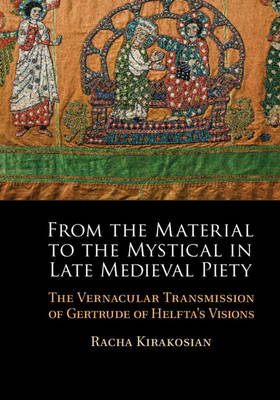
From the Material to the Mystical in Late Medieval Piety
The Vernacular Transmission of Gertrude of Helfta's Visions
Racha Kirakosian
Hardcover | Engels
€ 160,45
+ 320 punten
Eenvoudig bestellen
Veilig betalen


Gratis thuislevering vanaf € 30 (via bpost)
Gratis levering in je Standaard Boekhandel
Omschrijving
The German mystic Gertrude the Great of Helfta (c.1256-1301) is a globally venerated saint who is still central to the Sacred Heart Devotion. Her visions were first recorded in Latin, and they inspired generations of readers in processes of creative rewriting. The vernacular copies of these redactions challenge the long-standing idea that translations do not bear the same literary or historical weight as the originals upon which they are based. In this study, Racha Kirakosian argues that manuscript transmission reveals how redactors serve as cultural agents. Examining the late medieval vernacular copies of Gertrude's visions, she demonstrates how redactors recast textual materials, reflected changes in piety, and generated new forms of devotional practices. She also shows how these texts served as a bridge between material culture, in the form of textiles and book illumination, and mysticism. Kirakosian's multi-faceted study is an important contribution to current debates on medieval manuscript culture, authorship, and translation as objects of study in their own right.
Specificaties
Betrokkenen
- Auteur(s):
- Uitgeverij:
Inhoud
- Aantal bladzijden:
- 350
- Taal:
- Engels
Eigenschappen
- Productcode (EAN):
- 9781108841238
- Verschijningsdatum:
- 30/09/2021
- Uitvoering:
- Hardcover
- Formaat:
- Genaaid
- Afmetingen:
- 203 mm x 259 mm
- Gewicht:
- 952 g


Alleen bij Standaard Boekhandel
+ 320 punten op je klantenkaart van Standaard Boekhandel
CADEAU

AANGERADEN


Beoordelingen
We publiceren alleen reviews die voldoen aan de voorwaarden voor reviews. Bekijk onze voorwaarden voor reviews.