


- Afhalen na 1 uur in een winkel met voorraad
- Gratis thuislevering in België vanaf € 30
- Ruim aanbod met 7 miljoen producten
- Afhalen na 1 uur in een winkel met voorraad
- Gratis thuislevering in België vanaf € 30
- Ruim aanbod met 7 miljoen producten





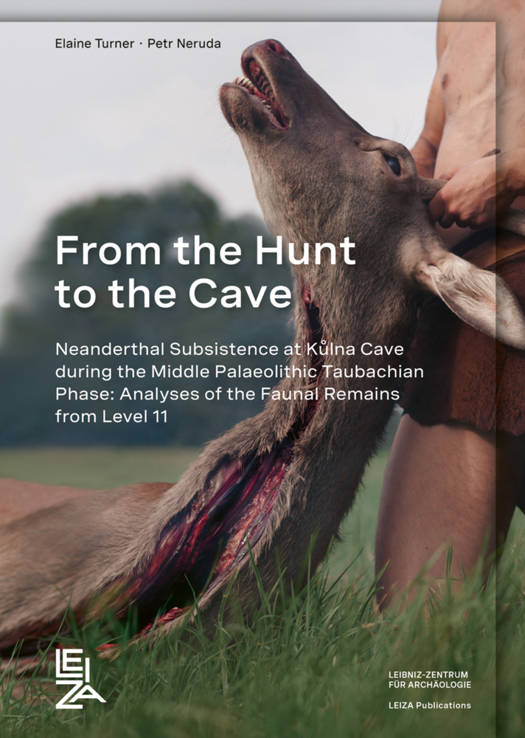
From the Hunt to the Cave
Neanderthal Subsistence at Kulna Cave During the Middle Palaeolithic Taubachian Phase: Analyses of the Faunal Remains from Level 11
Elaine Turner, Petr Neruda
€ 58,45
+ 116 punten
Omschrijving
Kulna is one of the largest cave sites in eastern Europe and contains evidence of repeated occupations by Neanderthals and modern humans. The current analysis of faunal remains from one of the Middle Palaeolithic levels, the Taubachian (Level 11), presents a detailed insight into Neanderthal subsistence at Kulna during the Eemian Interglacial and at the onset of the following glaciation. Due to the ideal location of the site on the boundary of a deep valley and uplands, Neanderthals were able to exploit fully a variety of local and regional habitats for game. Traces of butchery were recorded mainly on bones of horse, large bovines, red deer and giant deer, but also on remains of mammoth, woolly rhinoceros, reindeer, ibex/chamois, bear, beaver and roe deer. The fauna from Level 11 fits into a scenario of flexible Neanderthal hunting, in which groups of animals (horses, large bovines) would have been taken during communal hunts and the killing of other species (bear) would have necessitated different tactics, possibly the construction of traps (beaver). Important in the faunal assemblage is the presence of many retouchers and a few formal tools made of hard animal materials, demonstrating the close connection between the processing of animal carcasses for food and the use, manufacture and maintenance of lithic tools.
Specificaties
Betrokkenen
- Auteur(s):
- Uitgeverij:
Inhoud
- Aantal bladzijden:
- 170
- Taal:
- Engels
- Reeks:
- Reeksnummer:
- nr. 4
Eigenschappen
- Productcode (EAN):
- 9783884673683
- Verschijningsdatum:
- 12/05/2025
- Uitvoering:
- Hardcover
- Formaat:
- Genaaid
- Afmetingen:
- 215 mm x 15 mm
- Gewicht:
- 1550 g


Alleen bij Standaard Boekhandel
+ 116 punten op je klantenkaart van Standaard Boekhandel
AANGERADEN


Beoordelingen
We publiceren alleen reviews die voldoen aan de voorwaarden voor reviews. Bekijk onze voorwaarden voor reviews.