


- Afhalen na 1 uur in een winkel met voorraad
- Gratis thuislevering in België vanaf € 30
- Ruim aanbod met 7 miljoen producten
- Afhalen na 1 uur in een winkel met voorraad
- Gratis thuislevering in België vanaf € 30
- Ruim aanbod met 7 miljoen producten





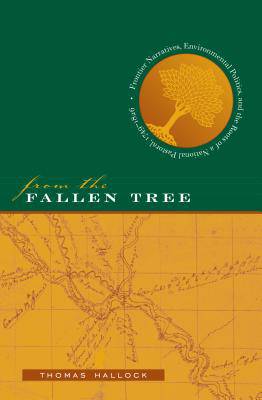
From the Fallen Tree
Frontier Narratives, Environmental Politics, and the Roots of a National Pastoral, 1749-1826
Thomas Hallock
Paperback | Engels
€ 57,95
+ 115 punten
Omschrijving
Anglo-American writers in the revolutionary era used pastoral images to place themselves as native to the continent, argues Thomas Hallock in From the Fallen Tree. Beginning in the mid-eighteenth century, as territorial expansion got under way in earnest, and ending with the era of Indian dispossession, the author demonstrates how authors explored the idea of wilderness and political identities in fully populated frontiers.
Hallock provides an alternative to the myth of a vacant wilderness found in later writings. Emphasizing shared cultures and conflict in the border regions, he reconstructs the milieu of Hector St. John de Crèvecoeur, Thomas Jefferson, Meriwether Lewis and William Clark, William Bartram, and James Fenimore Cooper, as well as lesser-known figures such as Lewis Evans, Jane Colden, Anne Grant, and Elias Boudinot. State papers, treaty documents, maps, and journals provide a rich backdrop against which Hallock reinterprets the origins of a pastoral tradition.
Combining the new western history, ecological criticism, and native American studies, Hallock uncovers the human stories embedded in descriptions of the land. His historicized readings offer an alternative to long-accepted myths about the vanishing backcountry, the march of civilization, and a pristine wilderness. The American pastoral, he argues, grew from the anxiety of independent citizens who became colonizers themselves.
Specificaties
Betrokkenen
- Auteur(s):
- Uitgeverij:
Inhoud
- Aantal bladzijden:
- 312
- Taal:
- Engels
Eigenschappen
- Productcode (EAN):
- 9780807854914
- Verschijningsdatum:
- 24/11/2003
- Uitvoering:
- Paperback
- Formaat:
- Trade paperback (VS)
- Afmetingen:
- 157 mm x 239 mm
- Gewicht:
- 444 g


Alleen bij Standaard Boekhandel
+ 115 punten op je klantenkaart van Standaard Boekhandel
Cadeau

AANGERADEN


Beoordelingen
We publiceren alleen reviews die voldoen aan de voorwaarden voor reviews. Bekijk onze voorwaarden voor reviews.