


- Afhalen na 1 uur in een winkel met voorraad
- Gratis thuislevering in België vanaf € 30
- Ruim aanbod met 7 miljoen producten
- Afhalen na 1 uur in een winkel met voorraad
- Gratis thuislevering in België vanaf € 30
- Ruim aanbod met 7 miljoen producten





€ 29,56
+ 29 punten
Uitvoering
Omschrijving
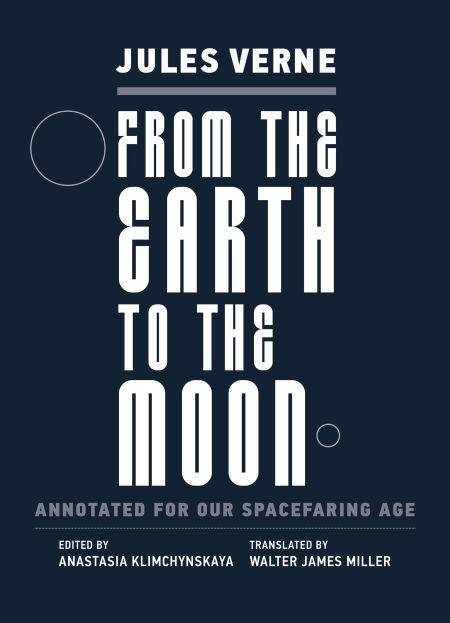
A new, annotated edition of Jules Verne’s classic, which considers the past, present, and future of spaceflight from scientific as well as humanistic angles.
In an age when the idea of a “planet B” seems tempting, this edition of Jules Verne’s classic From the Earth to the Moon (1865) offers a complete and unabridged translation into English alongside extensive annotations and essays from contributors that span disciplines. It uses the prescient novel as a launching pad to consider the past, present, and future of spaceflight from scientific, humanistic, social, legal, and ethical angles.
Jules Verne is often considered a founder of the science fiction genre and a technological prophet who anticipated many modern-day technologies—including a moonshot launching from Florida with a trio of astronauts almost exactly a century before it happened. Verne didn’t just dream up cool gadgets: He innovatively combined the scientific and the literary to write his scientific romances. He also thought deeply about the relationship between the technoscientific and the human at a time when the former was transforming human life on an unprecedented scale. Following in his footsteps, this annotated new edition bridges STEM and the humanities and sheds new light on this underappreciated classic by an iconic author.
Essays by Samit Basu, Jordan Bimm, Erika Nesvold, Adam Oyebanji, Malka Older, Adam Roberts, and Asif Siddiqi.
In an age when the idea of a “planet B” seems tempting, this edition of Jules Verne’s classic From the Earth to the Moon (1865) offers a complete and unabridged translation into English alongside extensive annotations and essays from contributors that span disciplines. It uses the prescient novel as a launching pad to consider the past, present, and future of spaceflight from scientific, humanistic, social, legal, and ethical angles.
Jules Verne is often considered a founder of the science fiction genre and a technological prophet who anticipated many modern-day technologies—including a moonshot launching from Florida with a trio of astronauts almost exactly a century before it happened. Verne didn’t just dream up cool gadgets: He innovatively combined the scientific and the literary to write his scientific romances. He also thought deeply about the relationship between the technoscientific and the human at a time when the former was transforming human life on an unprecedented scale. Following in his footsteps, this annotated new edition bridges STEM and the humanities and sheds new light on this underappreciated classic by an iconic author.
Essays by Samit Basu, Jordan Bimm, Erika Nesvold, Adam Oyebanji, Malka Older, Adam Roberts, and Asif Siddiqi.
Specificaties
Betrokkenen
- Auteur(s):
- Vertaler(s):
- Uitgeverij:
Inhoud
- Aantal bladzijden:
- 334
- Taal:
- Engels
- Reeks:
Eigenschappen
- Productcode (EAN):
- 9780262385558
- Verschijningsdatum:
- 29/06/2026
- Uitvoering:
- E-book
- Beveiligd met:
- Adobe DRM
- Formaat:
- ePub


Alleen bij Standaard Boekhandel
+ 29 punten op je klantenkaart van Standaard Boekhandel
Cadeau

AANGERADEN


Beoordelingen
We publiceren alleen reviews die voldoen aan de voorwaarden voor reviews. Bekijk onze voorwaarden voor reviews.