



Bedankt voor het vertrouwen het afgelopen jaar! Om jou te bedanken bieden we GRATIS verzending (in België) aan op alles gedurende de hele maand januari.
- Afhalen na 1 uur in een winkel met voorraad
- In januari gratis thuislevering in België
- Ruim aanbod met 7 miljoen producten
Bedankt voor het vertrouwen het afgelopen jaar! Om jou te bedanken bieden we GRATIS verzending (in België) aan op alles gedurende de hele maand januari.
- Afhalen na 1 uur in een winkel met voorraad
- In januari gratis thuislevering in België
- Ruim aanbod met 7 miljoen producten





Omschrijving
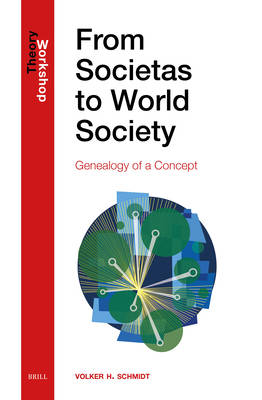
From Societas to World Society offers a genealogy of what is arguably sociology's most important concept, that of "society." The book covers this concept's entire intellectual history from its first systematization in Roman law 2,500 years ago to its crystallization in what Schmidt calls today's default model, informing both empirical research and theoretical logic in the social sciences, which he shows to be highly problematic. As an alternative, Schmidt suggests a conceptualization building upon Niklas Luhmann's theory of world society, which can be utilized for overcoming the former's Eurocentrism and to lay the groundwork for a genuinely global social science.
Specificaties
Betrokkenen
- Auteur(s):
- Uitgeverij:
Inhoud
- Aantal bladzijden:
- 404
- Taal:
- Engels
- Reeks:
- Reeksnummer:
- nr. 3
Eigenschappen
- Productcode (EAN):
- 9789004727106
- Verschijningsdatum:
- 22/05/2025
- Uitvoering:
- Hardcover
- Formaat:
- Genaaid
- Afmetingen:
- 155 mm x 234 mm
- Gewicht:
- 730 g


Alleen bij Standaard Boekhandel
+ 423 punten op je klantenkaart van Standaard Boekhandel
SOLDEN


Beoordelingen
We publiceren alleen reviews die voldoen aan de voorwaarden voor reviews. Bekijk onze voorwaarden voor reviews.