


- Afhalen na 1 uur in een winkel met voorraad
- Gratis thuislevering in België vanaf € 30
- Ruim aanbod met 7 miljoen producten
- Afhalen na 1 uur in een winkel met voorraad
- Gratis thuislevering in België vanaf € 30
- Ruim aanbod met 7 miljoen producten





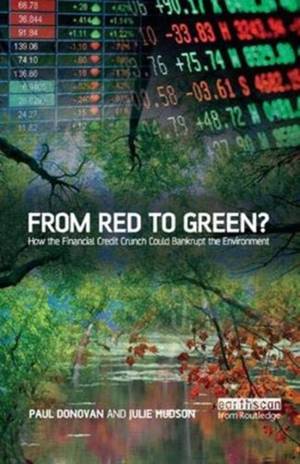
From Red to Green?
How the Financial Credit Crunch Could Bankrupt the Environment
Paul Donovan, Julie Hudson
Paperback | Engels
€ 74,95
+ 149 punten
Uitvoering
Omschrijving
Written by an economist and an investment professional, this book addresses the twin crises that the world is facing in the form of a simultaneous financial and environmental credit crunch. Financially, consumers are less able to consume now, and pay later. Environmentally, we may have already reached our credit limit and the bill for past financial and environmental consumption is falling due. Whether the financial credit crunch constrains consumers in a way that will be environmentally supportive, naturally slowing the consumption of finite resources, or hinders any effective resolution of the environmental credit crunch is of crucial importance. Policy responses to the financial crisis are likely to be constrained by the political need to support the economic status quo, and when combined with a global reduction in available investment capital there are serious challenges ahead if the economic and environmental damage of the environmental credit crunch is to be minimised. This book asks whether financial crunch-induced changes in consumer behaviour will be enough to avoid, or reduce, the environmental crunch many believe is just round the corner. Donovan and Hudson combine their respective economic and environmental perspectives to address this key question, reviewing this 'tale of two crunches' from the perspective of different economic sectors. The answer to the conundrum this book poses may lie in the only unlimited resource on the planet - human ingenuity.
Specificaties
Betrokkenen
- Auteur(s):
- Uitgeverij:
Inhoud
- Aantal bladzijden:
- 256
- Taal:
- Engels
Eigenschappen
- Productcode (EAN):
- 9781138380165
- Verschijningsdatum:
- 6/06/2019
- Uitvoering:
- Paperback
- Formaat:
- Trade paperback (VS)
- Afmetingen:
- 156 mm x 234 mm
- Gewicht:
- 362 g


Alleen bij Standaard Boekhandel
+ 149 punten op je klantenkaart van Standaard Boekhandel
Cadeau

AANGERADEN


Beoordelingen
We publiceren alleen reviews die voldoen aan de voorwaarden voor reviews. Bekijk onze voorwaarden voor reviews.