


- Afhalen na 1 uur in een winkel met voorraad
- Gratis thuislevering in België vanaf € 30
- Ruim aanbod met 7 miljoen producten
- Afhalen na 1 uur in een winkel met voorraad
- Gratis thuislevering in België vanaf € 30
- Ruim aanbod met 7 miljoen producten





€ 564,95
+ 1129 punten
Omschrijving
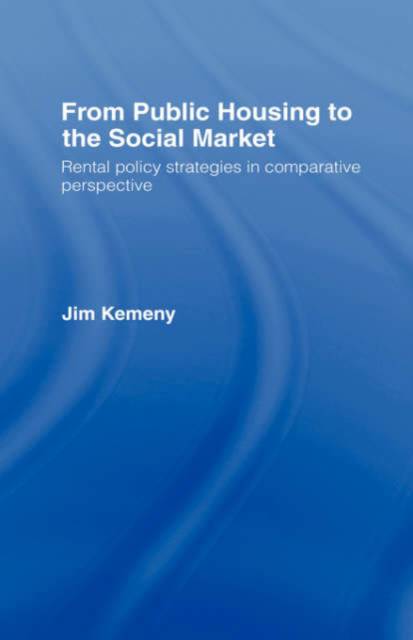
Jim Kemeny develops a conceptual framework to present a critical study of comparative rental markets. The framework centres around the concept of the process of maturation of cost rental housing and two policies for handling this which have been adopted by industrial societies. These are, firstly, the Anglo-Saxon "dualist" system, seen in Great Britain, Australia and New Zealand, and secondly, the Germanic "unitary market" system, seen in Sweden, The Netherlands, Germany and Switzerland. Using a comparative approach based around international case studies, Jim Kemeny shows how each system stems from different power structures, is governed by different policy strategies, and is informed by different ideological views of how markets operate. Offering a radical critique of the orthodox view, it is argued that the time is now right for English-speaking nations to abandon state control over cost renting but allow to it to compete directly with profit renting, as in the "unitary market" model. International in scope, this volume should be of interest to researchers in housing, sociology and related fields.
Specificaties
Betrokkenen
- Auteur(s):
- Uitgeverij:
Inhoud
- Aantal bladzijden:
- 216
- Taal:
- Engels
Eigenschappen
- Productcode (EAN):
- 9780415083652
- Verschijningsdatum:
- 10/11/1994
- Uitvoering:
- Hardcover
- Formaat:
- Genaaid
- Afmetingen:
- 140 mm x 216 mm
- Gewicht:
- 417 g



Alleen bij Standaard Boekhandel
+ 1129 punten op je klantenkaart van Standaard Boekhandel
Cadeau

AANGERADEN


Beoordelingen
We publiceren alleen reviews die voldoen aan de voorwaarden voor reviews. Bekijk onze voorwaarden voor reviews.