


- Afhalen na 1 uur in een winkel met voorraad
- Gratis thuislevering in België vanaf € 30
- Ruim aanbod met 7 miljoen producten
- Afhalen na 1 uur in een winkel met voorraad
- Gratis thuislevering in België vanaf € 30
- Ruim aanbod met 7 miljoen producten





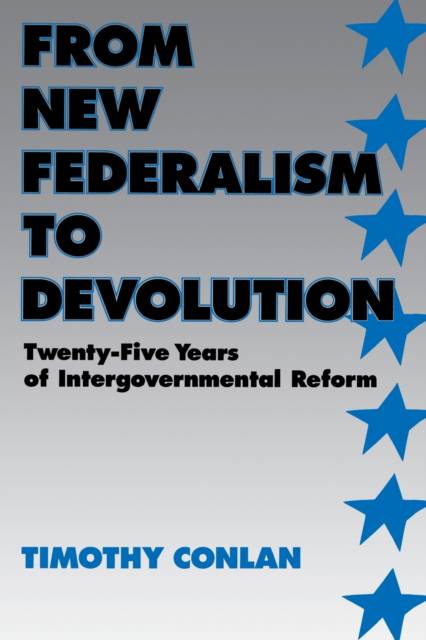
From New Federalism to Devolution
Twenty-Five Years of Intergovernmental Reform
Timothy J Conlan
Paperback | Engels
€ 50,95
+ 101 punten
Omschrijving
In the period from 1970 to the early 1990s, Republican leaders launched three major reforms of the federal system. Although all three initiatives advanced decentralization as a goal, they were remarkably different in their policy objectives, philosophical assumptions, patterns of politics, and policy outcomes. Expanding and updating his acclaimed book, New Federalism: Intergovernmental Reform from Nixon to Reagan (1988), Timothy Conlan provides a comprehensive look at intergovernmental reform from Nixon to the 104th Congress. The stated objectives of Republican reformers evolved from rationalizing and decentralizing an activist government, to rolling back the welfare state, to replacing it altogether. Conlan first explains why conservatives have placed so much emphasis on federal reform in their domestic agendas. He then examines Nixon's New Federalism, including management reforms and revenue sharing; analyzes the policies and politics of the ""Reagan revolution""; and reviews the legislative limitations and achievements of the 104th Congress. Finally, he traces the remarkable evolution of federalism reform politics and ideology during the past 30 years and provides alternative scenarios for the future of American federalism.
Specificaties
Betrokkenen
- Auteur(s):
- Uitgeverij:
Inhoud
- Aantal bladzijden:
- 392
- Taal:
- Engels
Eigenschappen
- Productcode (EAN):
- 9780815715313
- Verschijningsdatum:
- 1/08/1998
- Uitvoering:
- Paperback
- Formaat:
- Trade paperback (VS)
- Afmetingen:
- 151 mm x 229 mm
- Gewicht:
- 580 g



Alleen bij Standaard Boekhandel
+ 101 punten op je klantenkaart van Standaard Boekhandel
Cadeau

AANGERADEN


Beoordelingen
We publiceren alleen reviews die voldoen aan de voorwaarden voor reviews. Bekijk onze voorwaarden voor reviews.