


- Afhalen na 1 uur in een winkel met voorraad
- Gratis thuislevering in België vanaf € 30
- Ruim aanbod met 7 miljoen producten
- Afhalen na 1 uur in een winkel met voorraad
- Gratis thuislevering in België vanaf € 30
- Ruim aanbod met 7 miljoen producten





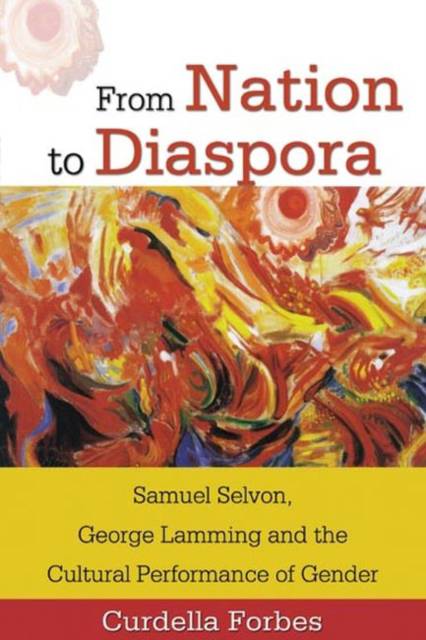
From Nation to Diaspora
Samuel Selvon, George Lamming and the Cultural Performance of Gender
Curdella Forbes
Paperback | Engels
€ 53,45
+ 106 punten
Eenvoudig bestellen
Veilig betalen


Gratis thuislevering vanaf € 30 (via bpost)
Gratis levering in je Standaard Boekhandel
Omschrijving
This book is the first comprehensive treatment of gender in the fiction of Samuel Selvon and George Lamming, two West Indian writers who are rarely analysed together. It demystifies discourses of creolization and nationalism, showing that these have masked complexities of gender in West Indian society, and that the maskings are in turn part of a larger masking of neo-colonial threads within the nationalist project.
Situating Selvon's and Lamming's work within the wider field of West Indian social thought and practice, Forbes demonstrates that gender is foundational within West Indian revolutionary action from slavery onwards, and that these writers' treatment of gender belongs to a revolutionary poetics compromised by the nationalist engagements of the 1950s-1970s.
The unorthodox character of West Indian gender, as seen in Selvon's and Lamming's treatment of it, anticipates and problematizes the concepts of "postmodernity" and "postmodernism" which have entered Caribbean discourse via postcolonial studies and the work of migration on Caribbean theory and criticism. Forbes link Selvon's and Lamming's work into a dialogue with the concepts of diaspora, postmodernity and postmodernism. She raises the issue of how the latter have impacted on West Indian gender identity, and considers the implications for West Indian writing, theory and survival in a neo-colonial, postmodern world.
Specificaties
Betrokkenen
- Auteur(s):
- Uitgeverij:
Inhoud
- Aantal bladzijden:
- 316
- Taal:
- Engels
Eigenschappen
- Productcode (EAN):
- 9789766401719
- Verschijningsdatum:
- 30/09/2005
- Uitvoering:
- Paperback
- Formaat:
- Trade paperback (VS)
- Afmetingen:
- 155 mm x 231 mm
- Gewicht:
- 430 g



Alleen bij Standaard Boekhandel
+ 106 punten op je klantenkaart van Standaard Boekhandel
CADEAU

AANGERADEN


Beoordelingen
We publiceren alleen reviews die voldoen aan de voorwaarden voor reviews. Bekijk onze voorwaarden voor reviews.