


- Afhalen na 1 uur in een winkel met voorraad
- Gratis thuislevering in België vanaf € 30
- Ruim aanbod met 7 miljoen producten
- Afhalen na 1 uur in een winkel met voorraad
- Gratis thuislevering in België vanaf € 30
- Ruim aanbod met 7 miljoen producten





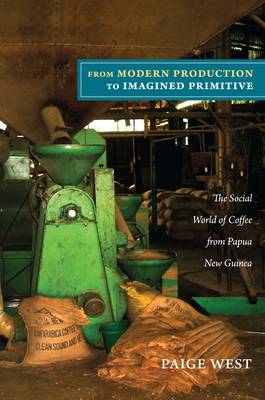
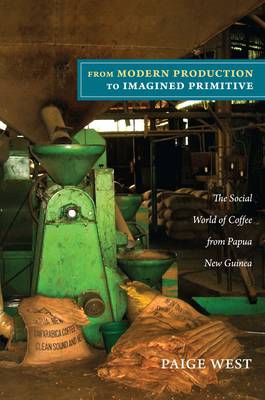
From Modern Production to Imagined Primitive
The Social World of Coffee from Papua New Guinea
Paige West
Paperback | Engels
€ 53,45
+ 106 punten
Omschrijving
In this vivid ethnography, Paige West tracks coffee as it moves from producers in Papua New Guinea to consumers around the world. She illuminates the social lives of the people who produce coffee, and those who process, distribute, market, and consume it. The Gimi peoples, who grow coffee in Papua New Guinea's highlands, are eager to expand their business and social relationships with the buyers who come to their highland villages, as well as with the people working in Goroka, where much of Papua New Guinea's coffee is processed; at the port of Lae, where it is exported; and in Hamburg, Sydney, and London, where it is distributed and consumed. This rich social world is disrupted by neoliberal development strategies, which impose prescriptive regimes of governmentality that are often at odds with Melanesian ways of being in, and relating to, the world. The Gimi are misrepresented in the specialty coffee market, which relies on images of primitivity and poverty to sell coffee. By implying that the "backwardness" of Papua New Guineans impedes economic development, these images obscure the structural relations and global political economy that actually cause poverty in Papua New Guinea.
Specificaties
Betrokkenen
- Auteur(s):
- Uitgeverij:
Inhoud
- Aantal bladzijden:
- 336
- Taal:
- Engels
Eigenschappen
- Productcode (EAN):
- 9780822351504
- Verschijningsdatum:
- 10/02/2012
- Uitvoering:
- Paperback
- Formaat:
- Trade paperback (VS)
- Afmetingen:
- 152 mm x 236 mm
- Gewicht:
- 498 g


Alleen bij Standaard Boekhandel
+ 106 punten op je klantenkaart van Standaard Boekhandel
Cadeau

AANGERADEN


Beoordelingen
We publiceren alleen reviews die voldoen aan de voorwaarden voor reviews. Bekijk onze voorwaarden voor reviews.