


- Afhalen na 1 uur in een winkel met voorraad
- Gratis thuislevering in België vanaf € 30
- Ruim aanbod met 7 miljoen producten
- Afhalen na 1 uur in een winkel met voorraad
- Gratis thuislevering in België vanaf € 30
- Ruim aanbod met 7 miljoen producten





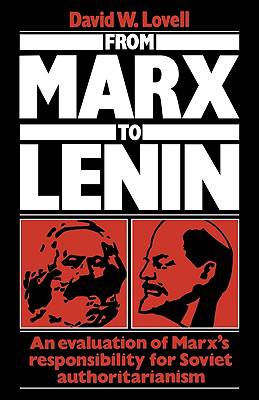
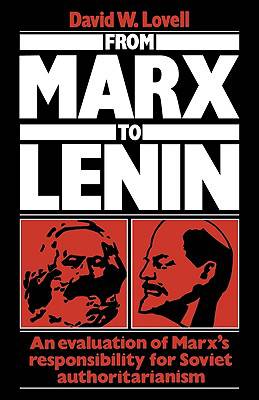
From Marx to Lenin
An Evaluation of Marx's Responsibility for Soviet Authoritarianism
David W Lovell, Lovell David W
Paperback | Engels
€ 64,95
+ 129 punten
Omschrijving
This study is a contribution to the debate, begun just after the October Revolution, concerning the relationship between Marx's project and Soviet society. It focuses, however, only on the political aspects of the matter: to what extent was early Soviet authoritarianism the necessary outcome of Marx's works? Since Lenin's practice and theory largely determined and justified the early political character of the Soviet state, we may ask whether Lenin was implementing Marx's project or a project of his own design. Lenin, influenced by debates within Social Democracy and by the experience of the Russian revolutionary tradition, used a one-sided interpretation of Marx's work to build and defend a 'transition' which was fundamentally authoritarian. Marx was not causally responsible for the theoretical foundation of Soviet authoritarianism.
Specificaties
Betrokkenen
- Auteur(s):
- Uitgeverij:
Inhoud
- Aantal bladzijden:
- 252
- Taal:
- Engels
Eigenschappen
- Productcode (EAN):
- 9780521125536
- Verschijningsdatum:
- 17/12/2009
- Uitvoering:
- Paperback
- Formaat:
- Trade paperback (VS)
- Afmetingen:
- 140 mm x 216 mm
- Gewicht:
- 322 g


Alleen bij Standaard Boekhandel
+ 129 punten op je klantenkaart van Standaard Boekhandel
AANGERADEN


Beoordelingen
We publiceren alleen reviews die voldoen aan de voorwaarden voor reviews. Bekijk onze voorwaarden voor reviews.