


- Afhalen na 1 uur in een winkel met voorraad
- Gratis thuislevering in België vanaf € 30
- Ruim aanbod met 7 miljoen producten
- Afhalen na 1 uur in een winkel met voorraad
- Gratis thuislevering in België vanaf € 30
- Ruim aanbod met 7 miljoen producten





€ 54,00
+ 108 punten
Omschrijving
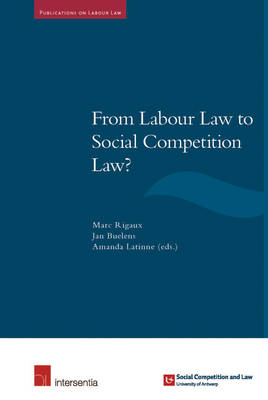
The future of labor law is widely considered to be in crisis by scholars of the field. The objective of this book is threefold. First, it draws attention to a number of phenomena and processes both within and outside the law that affect the protective mechanisms and essential functions of labor law. Secondly, the book's contributors point out the main causes and the principal consequences. Finally, it reflects the proposed remedies to preserve the essential task of labor law. The objectives are achieved by developing the following four themes: the existential relation between labor law, the labor market, and social competition * the historical tie between labor law and human dignity * the relationship between labor law, market law, and (social) competition law * the risk of a renewed contestation of the dignity of working people. The book provides intellectually challenging ideas for those interested in understanding, explaining, and interpreting labor laws, whether they are scholars, practitioners, judges, policy-makers, or workers and employers. (Series: Publications on Labour Law - Vol. 2)
Specificaties
Betrokkenen
- Auteur(s):
- Uitgeverij:
Inhoud
- Aantal bladzijden:
- 190
- Taal:
- Engels
- Reeks:
- Reeksnummer:
- nr. 2
Eigenschappen
- Productcode (EAN):
- 9781780682211
- Verschijningsdatum:
- 18/02/2014
- Uitvoering:
- Paperback
- Formaat:
- Trade paperback (VS)
- Afmetingen:
- 160 mm x 240 mm
- Gewicht:
- 335 g


Alleen bij Standaard Boekhandel
+ 108 punten op je klantenkaart van Standaard Boekhandel
Cadeau

AANGERADEN


Beoordelingen
We publiceren alleen reviews die voldoen aan de voorwaarden voor reviews. Bekijk onze voorwaarden voor reviews.