


- Afhalen na 1 uur in een winkel met voorraad
- Gratis thuislevering in België vanaf € 30
- Ruim aanbod met 7 miljoen producten
- Afhalen na 1 uur in een winkel met voorraad
- Gratis thuislevering in België vanaf € 30
- Ruim aanbod met 7 miljoen producten





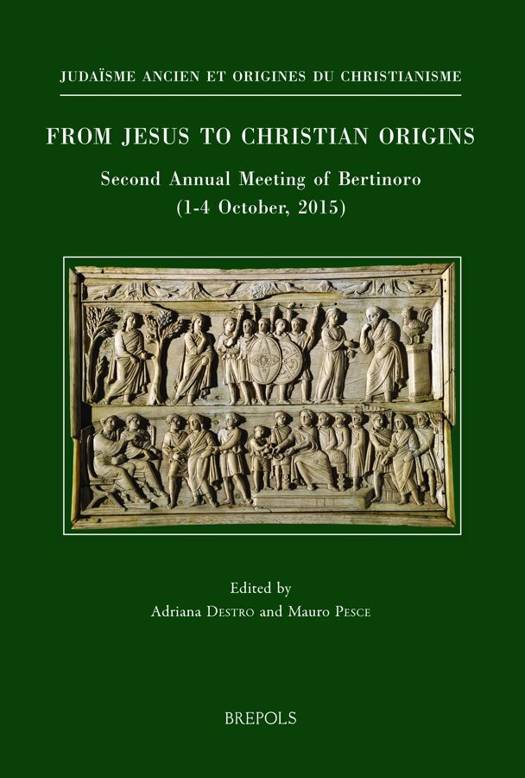
From Jesus to Christian Origins
Second Annual Meeting of Bertinoro (1-4 October, 2015)
Adriana Destro
€ 121,90
+ 243 punten
Omschrijving
Within the contemporary renewal of the exegetical and historical research on Jesus and early Christianity, this book stresses the importance of new epistemological and methodological perspectives in exegesis and History of Christianity (from the point of view of Cultural Anthropology and Comparative Religion). The articles of the first section present a consequent interpretation of Jesus within Jewish culture of the First century. Jesus activity is located within the Jewish movement of John the Baptizer. His words and political attitude is interpreted in the Jewish context of the Land of Israel under Roman administration. His movement is seen as a sub-group within Jewish society. The section dedicated to the first groups of Jesus' disciples in the Land of Israel and in the ancient Mediterranean world manly focuses on three constellations of questions: (a) the multiplicity and fractionation of Jesus' groups, for example in Jerusalem in the period between 30 an 70 of the First century, (b) the fact that post-Jesus Movement was sociologically characterized by a multiplicity of sub-groups of Jewish groups and movements; (c) the radical modifications provoked by the abandonment of Jewish contexts when the majority of followers was composed by Gentiles with limited relation with the daily practice of Jewish life and religion. Particular attention is dedicated to the connection of contemporary research with the interpretations of Jesus and early Christianity developed in the modern age.
Specificaties
Betrokkenen
- Auteur(s):
- Uitgeverij:
Inhoud
- Aantal bladzijden:
- 534
- Taal:
- Engels
- Reeks:
- Reeksnummer:
- nr. 16
Eigenschappen
- Productcode (EAN):
- 9782503583273
- Verschijningsdatum:
- 23/04/2020
- Uitvoering:
- Paperback
- Formaat:
- Trade paperback (VS)
- Afmetingen:
- 147 mm x 246 mm
- Gewicht:
- 839 g



Alleen bij Standaard Boekhandel
+ 243 punten op je klantenkaart van Standaard Boekhandel
Cadeau

AANGERADEN


Beoordelingen
We publiceren alleen reviews die voldoen aan de voorwaarden voor reviews. Bekijk onze voorwaarden voor reviews.