



Bedankt voor het vertrouwen het afgelopen jaar! Om jou te bedanken bieden we GRATIS verzending (in België) aan op alles gedurende de hele maand januari.
- Afhalen na 1 uur in een winkel met voorraad
- In januari gratis thuislevering in België
- Ruim aanbod met 7 miljoen producten
Bedankt voor het vertrouwen het afgelopen jaar! Om jou te bedanken bieden we GRATIS verzending (in België) aan op alles gedurende de hele maand januari.
- Afhalen na 1 uur in een winkel met voorraad
- In januari gratis thuislevering in België
- Ruim aanbod met 7 miljoen producten





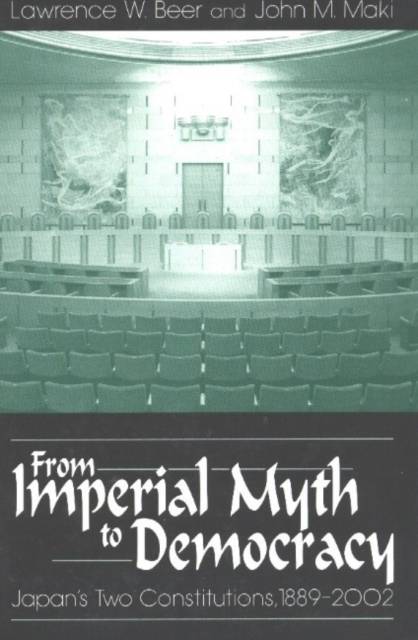
From Imperial Myth to Democracy
Japan's Two Constitutions, 1889-2002
Lawrence W Beer, John M Maki
Paperback | Engels
€ 24,45
+ 48 punten
Omschrijving
While English-language studies of Japanese law have enjoyed remarkable growth in the past half-century, scholars have given only scant attention to the broad sweep of Japan's constitutional history. Deftly combining legal and historical analysis, Lawrence W. Beer and John M. Maki contrast Japan's two modern-era constitutions - the Meiji Constitution of 1889 and the Showa Constitution of 1947. Moving beyond a narrowly focused study of the documents themselves, Beer and Maki present these constitutions as key to understanding differences in Japanese society and politics before and after World War II. Their clear and fluid presentation makes this an engaging and approachable study of not only constitutional law but also this remarkable period in Japanese history.
Specificaties
Betrokkenen
- Auteur(s):
- Uitgeverij:
Inhoud
- Aantal bladzijden:
- 216
- Taal:
- Engels
Eigenschappen
- Productcode (EAN):
- 9780870816864
- Verschijningsdatum:
- 7/10/2002
- Uitvoering:
- Paperback
- Formaat:
- Trade paperback (VS)
- Afmetingen:
- 173 mm x 216 mm
- Gewicht:
- 344 g


Alleen bij Standaard Boekhandel
+ 48 punten op je klantenkaart van Standaard Boekhandel
SOLDEN


Beoordelingen
We publiceren alleen reviews die voldoen aan de voorwaarden voor reviews. Bekijk onze voorwaarden voor reviews.