


- Afhalen na 1 uur in een winkel met voorraad
- Gratis thuislevering in België vanaf € 30
- Ruim aanbod met 7 miljoen producten
- Afhalen na 1 uur in een winkel met voorraad
- Gratis thuislevering in België vanaf € 30
- Ruim aanbod met 7 miljoen producten




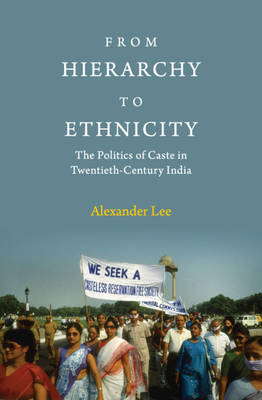
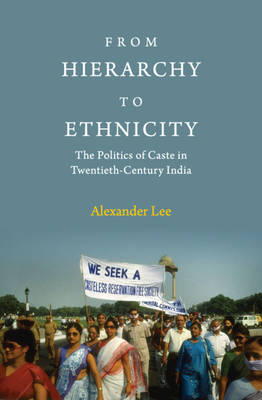
From Hierarchy to Ethnicity
The Politics of Caste in Twentieth-Century India
Alexander Lee
Hardcover | Engels
€ 105,45
+ 210 punten
Omschrijving
Caste and ethnicity have been crucial in shaping the discourse around identity politics in modern South Asia. This book critically discusses two important trends in twentieth-century Indian politics - the rise in the political salience of caste identities, and a shift in the way caste identity was conceptualized; from a hierarchical system based on the adoption of specific behaviours to a system based on bounded and autonomous groups not dissimilar to ethnic groups as conceived of in other parts of the world. It traces these changes to the evolving incentives of the elites of poorer ethnic groups, which are themselves a product of the gradual rise of literacy in colonial South Asia, and the democratization of the political system. This theory challenges accounts that emphasize the role of the colonial state in the evolution of caste. It presents a wide range of novel historical evidence to support these claims, both qualitative and quantitative, and covering both the colonial and post-independence periods.
Specificaties
Betrokkenen
- Auteur(s):
- Uitgeverij:
Inhoud
- Aantal bladzijden:
- 310
- Taal:
- Engels
Eigenschappen
- Productcode (EAN):
- 9781108489904
- Verschijningsdatum:
- 27/02/2020
- Uitvoering:
- Hardcover
- Formaat:
- Genaaid
- Afmetingen:
- 163 mm x 234 mm
- Gewicht:
- 498 g


Alleen bij Standaard Boekhandel
+ 210 punten op je klantenkaart van Standaard Boekhandel
AANGERADEN


Beoordelingen
We publiceren alleen reviews die voldoen aan de voorwaarden voor reviews. Bekijk onze voorwaarden voor reviews.