


- Afhalen na 1 uur in een winkel met voorraad
- Gratis thuislevering in België vanaf € 30
- Ruim aanbod met 7 miljoen producten
- Afhalen na 1 uur in een winkel met voorraad
- Gratis thuislevering in België vanaf € 30
- Ruim aanbod met 7 miljoen producten





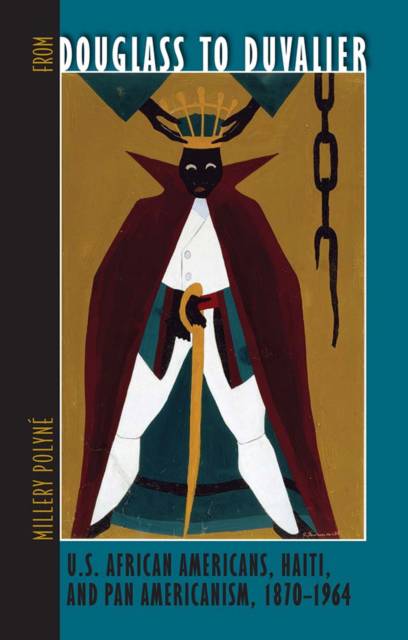
From Douglass to Duvalier
U.S. African Americans, Haiti, and Pan Americanism, 1870-1964
Millery Polyne, Millery Polyn
€ 38,45
+ 76 punten
Eenvoudig bestellen
Veilig betalen


Gratis thuislevering vanaf € 30 (via bpost)
Gratis levering in je Standaard Boekhandel
Omschrijving
"A remarkable new analysis of how African Americans and Haitians interacted over the long term. It asserts bold new methods and conclusions on inter-American relations, Pan Americanism, and U.S.-Haitian relations."--David Sheinin, Trent University "Polyné has provided a clearly written, nuanced, deeply researched study about the multiple efforts among the Haitian and African American elite to advance both their national agendas and larger global commitments to the diaspora. No one has focused on Haiti the way he has." --Carol Anderson, Emory University "Adds an important and much-needed layer to our understanding of the strengths and weaknesses of diasporic relations."--Carol Anderson, Emory University Haiti has long been both a source of immense pride--because of the Haitian Revolution--and of profound disappointment--because of the unshakable realities of poverty, political instability, and violence--to the black diasporic imagination. Charting the long history of these multiple meanings is the focus of Millery Polyne's rich and critical transnational history of U.S. African Americans and Haitians. Stretching from the thoughts and words of American intellectuals such as Frederick Douglass, Robert Moton, and Claude Barnett to the Civil Rights era, Polyne's temporal scope is breathtaking. But just as impressive is the thematic range of the work, which carefully examines the political, economic, and cultural relations between U.S. African Americans and Haitians. From Douglass to Duvalier examines the creative and critical ways U.S. African Americans and Haitians engaged the idealized tenets of Pan Americanism--mutual cooperation, egalitarianism, and nonintervention between nation-states--in order to strengthen Haiti's social, economic, and political growth and stability. The depth of Polyne's research allows him to speak confidently about the convoluted ways that these groups have viewed modernization, "uplift," and racial unity, as well as the shifting meanings and importance of the concepts over time.
Specificaties
Betrokkenen
- Auteur(s):
- Uitgeverij:
Inhoud
- Aantal bladzijden:
- 296
- Taal:
- Engels
- Reeks:
Eigenschappen
- Productcode (EAN):
- 9780813037639
- Verschijningsdatum:
- 16/05/2011
- Uitvoering:
- Paperback
- Formaat:
- Trade paperback (VS)
- Afmetingen:
- 152 mm x 229 mm
- Gewicht:
- 458 g



Alleen bij Standaard Boekhandel
+ 76 punten op je klantenkaart van Standaard Boekhandel
CADEAU

AANGERADEN


Beoordelingen
We publiceren alleen reviews die voldoen aan de voorwaarden voor reviews. Bekijk onze voorwaarden voor reviews.