


- Afhalen na 1 uur in een winkel met voorraad
- Gratis thuislevering in België vanaf € 30
- Ruim aanbod met 7 miljoen producten
- Afhalen na 1 uur in een winkel met voorraad
- Gratis thuislevering in België vanaf € 30
- Ruim aanbod met 7 miljoen producten





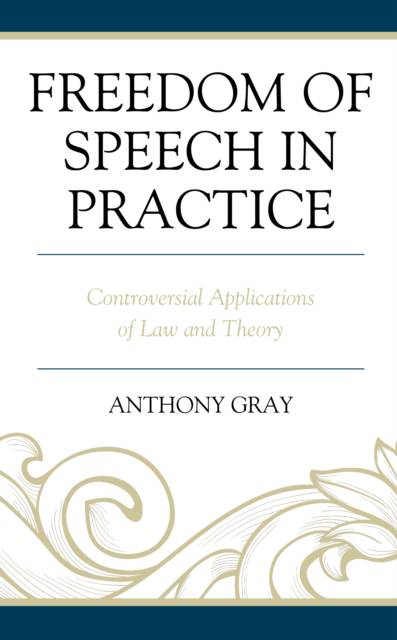
Freedom of Speech in Practice
Controversial Applications of Law and Theory
Anthony Gray
Hardcover | Engels
€ 203,95
+ 407 punten
Omschrijving
This book considers the application of free speech principles in controversial contexts discussing United States law and equivalent law in Europe, Canada and Australia. Anthony Gray examines the extent to which speech of public sector employees is and should be protected. He tackles the difficult question of hate speech and the degree to which regulation of it has been permitted, and should be permitted. The growing controversy of speech in a university setting is discussed along with the roles campuses play in fostering intellectual debate which democracies depend on. Lastly, Gray looks at free speech issues at stake in the exponential growth of online activity and analyzes questions the of liability these tech companies have and their role as facilitators of mass communication, to what extent does the first amendment even apply, and the potential of the internet to support democratic traditions. Overall, Gray finds that in these several key areas, free speech rights are not as strongly protected as they should be. Courts have often bowed to decision makers balancing away free speech rights in favor of other objectives and instead need to re-assert the importance of free speech in these disparate contexts.
Specificaties
Betrokkenen
- Auteur(s):
- Uitgeverij:
Inhoud
- Aantal bladzijden:
- 266
- Taal:
- Engels
Eigenschappen
- Productcode (EAN):
- 9781498597715
- Verschijningsdatum:
- 17/10/2019
- Uitvoering:
- Hardcover
- Formaat:
- Genaaid
- Afmetingen:
- 152 mm x 229 mm
- Gewicht:
- 562 g


Alleen bij Standaard Boekhandel
+ 407 punten op je klantenkaart van Standaard Boekhandel
Cadeau

AANGERADEN


Beoordelingen
We publiceren alleen reviews die voldoen aan de voorwaarden voor reviews. Bekijk onze voorwaarden voor reviews.