


- Afhalen na 1 uur in een winkel met voorraad
- Gratis thuislevering in België vanaf € 30
- Ruim aanbod met 7 miljoen producten
- Afhalen na 1 uur in een winkel met voorraad
- Gratis thuislevering in België vanaf € 30
- Ruim aanbod met 7 miljoen producten





€ 61,45
+ 122 punten
Omschrijving
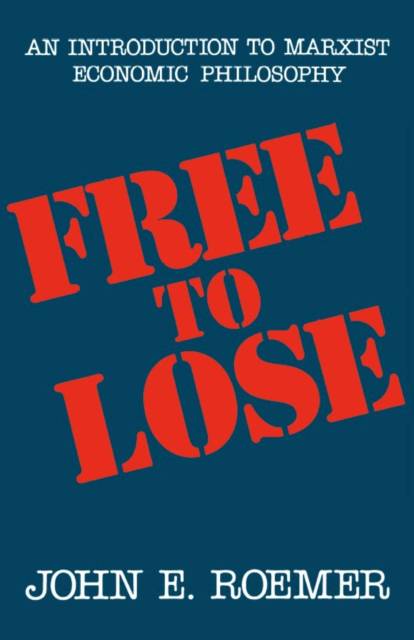
Attacking the usefulness of such central Marxian concepts as the labor theory of value and surplus value, John Roemer reconstructs Marxian economic philosophy from the concepts of exploitation and class, showing that exploitation can be derived from a system of property relations. He then looks at the causes of the unequal distribution of wealth, including robbery and plunder, willingness to take risks, differential rates of time preference, luck, and entrepreneurship. He further examines the evolution of property systems--slave, feudal, capitalist, socialist--from the perspective of the theory of historical materialism, and ends by analyzing the properties of a social system in which ownership of productive assets in the external world is public, while ownership of internal productive assets--skills and talents--is private.
Specificaties
Betrokkenen
- Auteur(s):
- Uitgeverij:
Inhoud
- Aantal bladzijden:
- 216
- Taal:
- Engels
- Reeks:
Eigenschappen
- Productcode (EAN):
- 9780674318762
- Verschijningsdatum:
- 1/01/1988
- Uitvoering:
- Paperback
- Formaat:
- Trade paperback (VS)
- Afmetingen:
- 152 mm x 229 mm
- Gewicht:
- 322 g


Alleen bij Standaard Boekhandel
+ 122 punten op je klantenkaart van Standaard Boekhandel
Cadeau

AANGERADEN


Beoordelingen
We publiceren alleen reviews die voldoen aan de voorwaarden voor reviews. Bekijk onze voorwaarden voor reviews.