


- Afhalen na 1 uur in een winkel met voorraad
- Gratis thuislevering in België vanaf € 30
- Ruim aanbod met 7 miljoen producten
- Afhalen na 1 uur in een winkel met voorraad
- Gratis thuislevering in België vanaf € 30
- Ruim aanbod met 7 miljoen producten





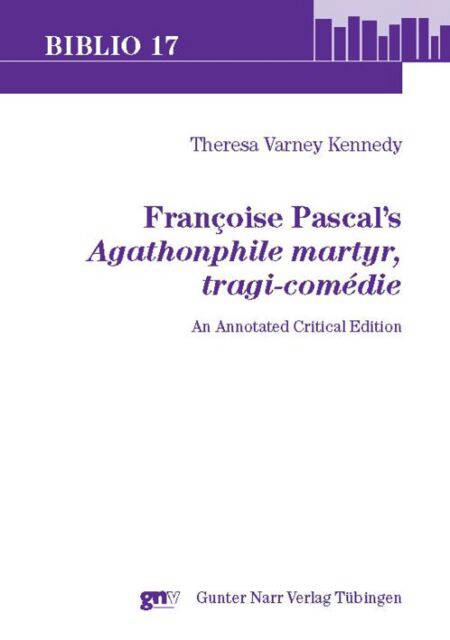
Françoise Pascal's Agathonphile martyr, tragi-comédie E-BOOK
An annotated Critical Edition
Theresa Varney Kennedy
€ 54,00
+ 54 punten
Eenvoudig bestellen
Veilig betalen


Onmiddellijk geleverd via e-mail
Omschrijving
Written at the end of the Counter Reformation, Francoise Pascal´s first play, Agathonphie martyr, tragi-comedie (1655), is an important transitional piece, marking the passage from religious drama as a moralizing device to that of a diversion, prompted by the growing influence of the société mondaine in Lyon. In her introduction, Kennedy examines how this play is characterized by a unique merging of two genres: the tragicomedy and the martyr play. This play also merits our attention in terms of new female characterization. Kenedy demonstrates how Pascal´s female martyr Triphine diverges from the traditionally "coldhearted" female martyr, as an independent thinker who speaks her heart, proclaiming the virtues of "constant" love.
Specificaties
Betrokkenen
- Auteur(s):
- Uitgeverij:
Inhoud
- Aantal bladzijden:
- 239
- Taal:
- Duits
- Reeks:
Eigenschappen
- Productcode (EAN):
- 9783823374169
- Verschijningsdatum:
- 17/06/2008
- Uitvoering:
- E-book
- Beveiligd met:
- Digital watermarking
- Formaat:


Alleen bij Standaard Boekhandel
+ 54 punten op je klantenkaart van Standaard Boekhandel
CADEAU

AANGERADEN


Beoordelingen
We publiceren alleen reviews die voldoen aan de voorwaarden voor reviews. Bekijk onze voorwaarden voor reviews.