


- Afhalen na 1 uur in een winkel met voorraad
- Gratis thuislevering in België vanaf € 30
- Ruim aanbod met 7 miljoen producten
- Afhalen na 1 uur in een winkel met voorraad
- Gratis thuislevering in België vanaf € 30
- Ruim aanbod met 7 miljoen producten




Omschrijving
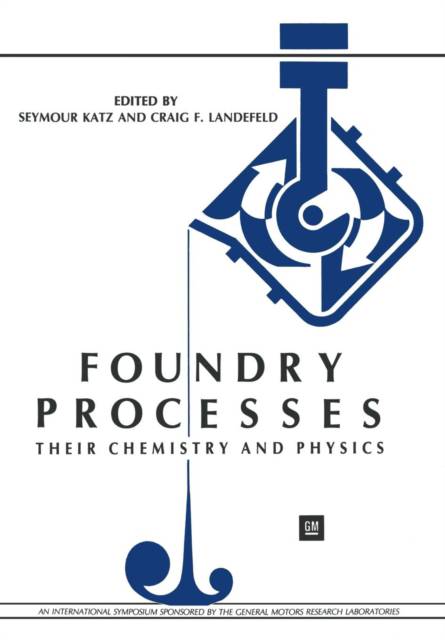
For a number of years it has been a General Motors Research Laboratories custom to hold a symposium on a subject which is new and emerging, and to invite the best people in the world in that subject to come together to talk to each other. Initially, I had some difficulty in regarding foundry processes as a new and emerging subject. Copper alloys have been in foundry practice for about six thousand years. Foundrymen working with those alloys have been recognized, as such, for nearly all that time. Iron has a much shorter history, probably only three or four thousand years. So what's new? What is new is that a subject which has always been so complex and so difficult that it could only be a craft skill, with bits and pieces of knowledge and bits and pieces of insight, has begun to yield to new abilities to solve very complex problems. We do this now because we can handle great amounts of data by computational means, using new and more complicated theoretical treatments than we could deal with before. In fact, we have a new technology with which we can attack these terribly difficult problems. Thus, foundry processing is becoming a new subject because new things can be done with it.
Specificaties
Betrokkenen
- Auteur(s):
- Uitgeverij:
Inhoud
- Aantal bladzijden:
- 526
- Taal:
- Engels
Eigenschappen
- Productcode (EAN):
- 9781461282921
- Verschijningsdatum:
- 12/12/2011
- Uitvoering:
- Paperback
- Formaat:
- Trade paperback (VS)
- Afmetingen:
- 170 mm x 244 mm
- Gewicht:
- 848 g


Alleen bij Standaard Boekhandel
Cadeau

AANGERADEN


Beoordelingen
We publiceren alleen reviews die voldoen aan de voorwaarden voor reviews. Bekijk onze voorwaarden voor reviews.