



Bedankt voor het vertrouwen het afgelopen jaar! Om jou te bedanken bieden we GRATIS verzending (in België) aan op alles gedurende de hele maand januari.
- Afhalen na 1 uur in een winkel met voorraad
- In januari gratis thuislevering in België
- Ruim aanbod met 7 miljoen producten
Bedankt voor het vertrouwen het afgelopen jaar! Om jou te bedanken bieden we GRATIS verzending (in België) aan op alles gedurende de hele maand januari.
- Afhalen na 1 uur in een winkel met voorraad
- In januari gratis thuislevering in België
- Ruim aanbod met 7 miljoen producten





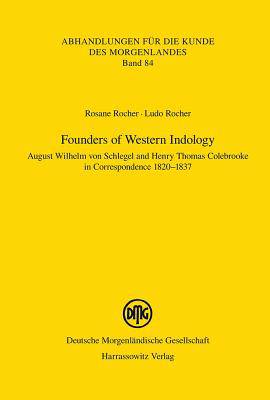
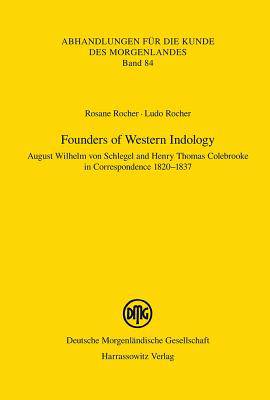
Founders of Western Indology
August Wilhelm Von Schlegel and Henry Thomas Colebrooke in Correspondence 1820-1837
Rosane Rocher, Ludo Rocher
Paperback | Engels, Frans, Duits
€ 93,45
+ 186 punten
Omschrijving
Founders of Western Indology presents in high relief the central roles two scholars, one German, one English, played in establishing classical Indology in Europe. Their correspondence, edited here for the first time, with extensive introductions and annotations, documents the formative decades during which, under Schlegel's leadership, incipient Indic scholarship in Europe strove first to use, and promptly to transcend, the work of British amateur scholars in India and their reliance on Indian pandit teachers. The study by Rosane and Ludo Rocher illuminates the international ambit of competition and controversy in which Indian studies became institutionalized and professionalized, most notably at Prussian universities after a first chair was created in Paris and societies were founded in Paris and in London to emulate the Asiatic Society in Calcutta, over which Colebrooke had presided. It captures how Colebrooke's gift of his unrivaled collection of manuscripts to the East India Library helped transfer the primary European seat of Indological research from Paris to London. Comparative standards of pre-university education come to the fore when Colebrooke entrusts a son to Schlegel's affectionate tutelage in Bonn. A companion to the authors' biography of Colebrooke (2012), this volume puts greater emphasis on Schlegel, who sought to consult Colebrooke's "oracle" and brought up most items for discussion.
Specificaties
Betrokkenen
- Auteur(s):
- Uitgeverij:
Inhoud
- Aantal bladzijden:
- 205
- Taal:
- Engels, Frans, Duits
Eigenschappen
- Productcode (EAN):
- 9783447068789
- Verschijningsdatum:
- 1/02/2013
- Uitvoering:
- Paperback
- Formaat:
- Trade paperback (VS)
- Afmetingen:
- 145 mm x 218 mm
- Gewicht:
- 340 g


Alleen bij Standaard Boekhandel
+ 186 punten op je klantenkaart van Standaard Boekhandel
SOLDEN


Beoordelingen
We publiceren alleen reviews die voldoen aan de voorwaarden voor reviews. Bekijk onze voorwaarden voor reviews.