


- Afhalen na 1 uur in een winkel met voorraad
- Gratis thuislevering in België vanaf € 30
- Ruim aanbod met 7 miljoen producten
- Afhalen na 1 uur in een winkel met voorraad
- Gratis thuislevering in België vanaf € 30
- Ruim aanbod met 7 miljoen producten





€ 39,95
+ 79 punten
Omschrijving
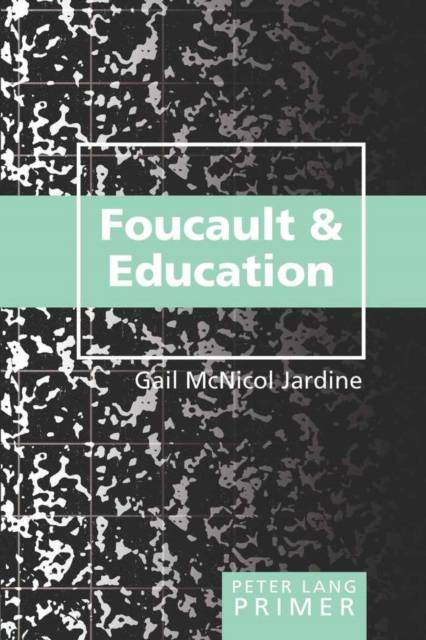
This book explores the works of Michel Foucault and their relevance for educational theory and practice. Gail McNicol Jardine investigates Foucault's early examinations of the transformation of systems of knowledge as societies change, his in-depth, critical analyses of Knowledge-Power, and his increasingly more explicit examination of the relationship of the Self to acts of Knowledge-Power. Specific themes that are explored from Foucault's work are archeology, genealogy, disciplinary knowledge and power, normality, the gaze, panopticism, the examination, critique and resistance. This primer contains ample references that allow the reader to examine Foucault's own use of these important analytic concepts and tools. This book will be useful in undergraduate and graduate courses in education, critical theory, educational theory, critical pedagogy, philosophy, psychology, and sociology.
Specificaties
Betrokkenen
- Auteur(s):
- Uitgeverij:
Inhoud
- Aantal bladzijden:
- 129
- Taal:
- Engels
- Reeks:
- Reeksnummer:
- nr. 3
Eigenschappen
- Productcode (EAN):
- 9780820474397
- Verschijningsdatum:
- 8/09/2005
- Uitvoering:
- Paperback
- Formaat:
- Trade paperback (VS)
- Afmetingen:
- 155 mm x 224 mm
- Gewicht:
- 616 g


Alleen bij Standaard Boekhandel
+ 79 punten op je klantenkaart van Standaard Boekhandel
CADEAU

AANGERADEN


Beoordelingen
We publiceren alleen reviews die voldoen aan de voorwaarden voor reviews. Bekijk onze voorwaarden voor reviews.