



Je cadeautjes zeker op tijd in huis hebben voor de feestdagen? Kom langs in onze winkels en vind het perfecte geschenk!
- Afhalen na 1 uur in een winkel met voorraad
- Gratis thuislevering in België vanaf € 30
- Ruim aanbod met 7 miljoen producten
Je cadeautjes zeker op tijd in huis hebben voor de feestdagen? Kom langs in onze winkels en vind het perfecte geschenk!
- Afhalen na 1 uur in een winkel met voorraad
- Gratis thuislevering in België vanaf € 30
- Ruim aanbod met 7 miljoen producten





€ 47,95
+ 95 punten
Omschrijving
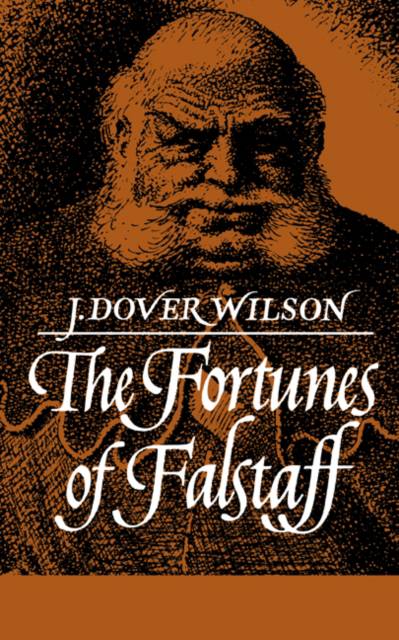
Dr Dover Wilson examines Falstaff's role in the two parts of Henry IV and his relationship to the Prince. Like most other Shakespearean scholars he had accepted, Bradley's portrait as shown in The Rejection of Falstaff, until (as he writes) he 'began checking it with yet another portrait - that which I found in the pages of Shakespeare himself. As the result of much recent work on the two parts of Henry IV, a new Falstaff stands before me, as fascinating as Bradley's, certainly quite as human, but different; and beside him stands a still more unexpected Prince Hal. The discovery throws all my previous ideas out of focus.' As the reviewer in the Times Literary Supplement wrote, Falstaff 'is no hero, as the romantics have tried to make him out, nor is he merely a typical and traditional stage-butt. But he is Falstaff riding for a fall; and when he takes his toss he is up again in still unconquerable effrontery and humour ... The Prince as we watch him through Dr Dover Wilson's eyes growing in grace, first in chivalry and then in justice, we do more than observe the making of a hero-king. We get to know a very lovable, faulty, generous, noble-minded young man; and a character in the play whose scenes are so far from being mere padding between Falstaff's that the whole is seen as a masterpiece of construction.'
Specificaties
Betrokkenen
- Auteur(s):
- Uitgeverij:
Inhoud
- Aantal bladzijden:
- 152
- Taal:
- Engels
Eigenschappen
- Productcode (EAN):
- 9780521092463
- Verschijningsdatum:
- 30/08/1979
- Uitvoering:
- Paperback
- Formaat:
- Trade paperback (VS)
- Afmetingen:
- 130 mm x 207 mm
- Gewicht:
- 185 g



Alleen bij Standaard Boekhandel
+ 95 punten op je klantenkaart van Standaard Boekhandel
CADEAU


Beoordelingen
We publiceren alleen reviews die voldoen aan de voorwaarden voor reviews. Bekijk onze voorwaarden voor reviews.