


- Afhalen na 1 uur in een winkel met voorraad
- Gratis thuislevering in België vanaf € 30
- Ruim aanbod met 7 miljoen producten
- Afhalen na 1 uur in een winkel met voorraad
- Gratis thuislevering in België vanaf € 30
- Ruim aanbod met 7 miljoen producten





Omschrijving
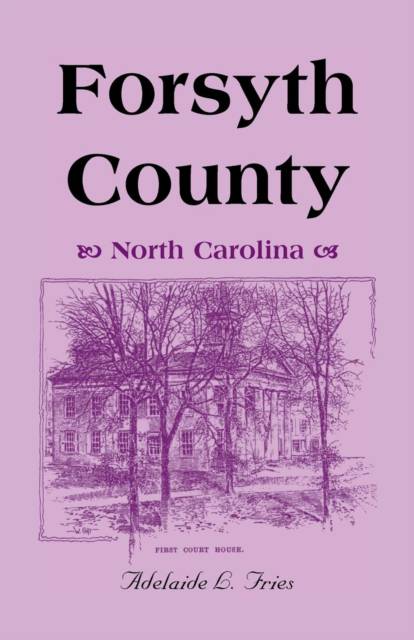
This small book gives a remarkably detailed history of the people and the establishment of Forsyth County, which is the home of Winston-Salem. This land had many owners as the result of a series of royal bequests, land patents and proprietorships. In 1753, Moravians came from Germany via Pennsylvania and began to settle on a tract of land that they called Wachovia. Other pioneers and settlements soon followed at Kernersville, Friedberg, Friedland and Hope. Eventually, townships were formed, civic groups convened, and a tract was chosen on which to build a county courthouse. Leading citizens are named throughout this history, which also discusses the county militia, the Civil War and the formation of township lines. North Carolina's secession from the Union is covered, as well as Forsyth County's role in the Civil War. No battles were fought there, but it was used as a place of refuge and supply for the Rebel Army and hundreds of men from Forsyth County joined the Confederate cause. Various Forsyth County regimental commanders of the Civil War are named. Several maps illustrate the evolution of the county. Two courthouses are also illustrated. The original subject index contains important places, events and names.
Specificaties
Betrokkenen
- Auteur(s):
- Uitgeverij:
Inhoud
- Aantal bladzijden:
- 152
- Taal:
- Engels
Eigenschappen
- Productcode (EAN):
- 9780788412363
- Verschijningsdatum:
- 1/03/2013
- Uitvoering:
- Paperback
- Formaat:
- Trade paperback (VS)
- Afmetingen:
- 140 mm x 216 mm
- Gewicht:
- 181 g


Alleen bij Standaard Boekhandel
+ 36 punten op je klantenkaart van Standaard Boekhandel
CADEAU


Beoordelingen
We publiceren alleen reviews die voldoen aan de voorwaarden voor reviews. Bekijk onze voorwaarden voor reviews.