


- Afhalen na 1 uur in een winkel met voorraad
- Gratis thuislevering in België vanaf € 30
- Ruim aanbod met 7 miljoen producten
- Afhalen na 1 uur in een winkel met voorraad
- Gratis thuislevering in België vanaf € 30
- Ruim aanbod met 7 miljoen producten





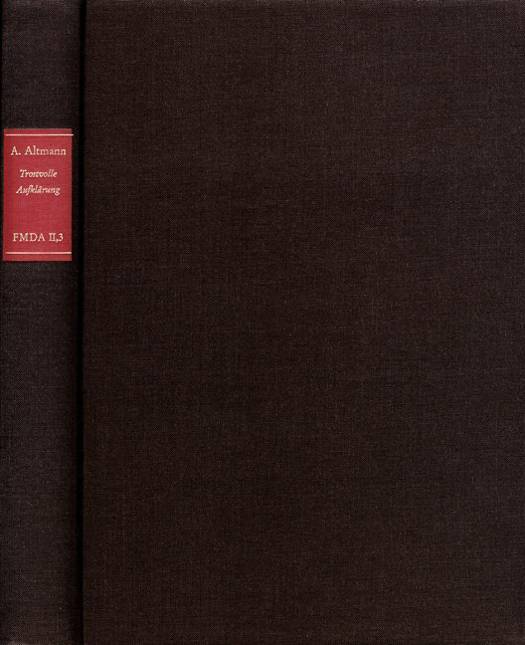
Forschungen und Materialien zur deutschen Aufklärung / Die trostvolle Aufklärung
Studien zur Metaphysik und politischen Theorie Moses Mendelssohns
Alexander Altmann
€ 96,95
+ 193 punten
Omschrijving
This collection of essays deals mainly with two key aspects in Mendelssohn's thinking: metaphysics and politics. Five of the seven essays on metaphysical questions revolve around Mendelssohn's view of the world and mankind. By relating his views to those of Spinoza, Leibniz, Jacobi and Lessing, it is possible at the same time to establish his position within the German Enlightenment. Two further studies on metaphysics focus on the problem of God's existence and divine providence. The five essays on Mendelssohn's political theories break new ground. Mendelssohn's opinions on incendiary themes of the Enlightenment such as natural law and the state of nature, the church's authority to exert power, freedom of conscience and tolerance are discussed and compared with Kant's opinions. The volume contains an appendix which brings together the metaphysical and the political and in doing so explains the real meaning of what Mendelssohn meant by »consolatory Enlightenment«.
Specificaties
Betrokkenen
- Auteur(s):
- Uitgeverij:
Inhoud
- Taal:
- Duits, Engels
- Reeks:
Eigenschappen
- Productcode (EAN):
- 9783772808241
- Uitvoering:
- Hardcover
- Formaat:
- Linnen over kaft
- Afmetingen:
- 245
- Gewicht:
- 816 g


Alleen bij Standaard Boekhandel
+ 193 punten op je klantenkaart van Standaard Boekhandel
CADEAU

AANGERADEN


Beoordelingen
We publiceren alleen reviews die voldoen aan de voorwaarden voor reviews. Bekijk onze voorwaarden voor reviews.