



Bedankt voor het vertrouwen het afgelopen jaar! Om jou te bedanken bieden we GRATIS verzending (in België) aan op alles gedurende de hele maand januari.
- Afhalen na 1 uur in een winkel met voorraad
- In januari gratis thuislevering in België
- Ruim aanbod met 7 miljoen producten
Bedankt voor het vertrouwen het afgelopen jaar! Om jou te bedanken bieden we GRATIS verzending (in België) aan op alles gedurende de hele maand januari.
- Afhalen na 1 uur in een winkel met voorraad
- In januari gratis thuislevering in België
- Ruim aanbod met 7 miljoen producten





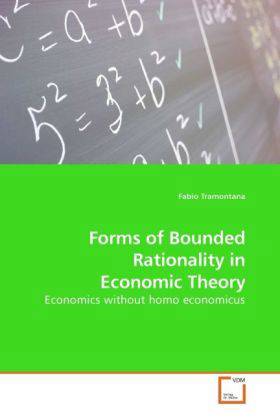
Forms of Bounded Rationality in Economic Theory
Economics without homo economicus
Fabio Tramontana
Paperback | Engels
€ 67,45
+ 134 punten
Omschrijving
According to the New Palgrave Dictionary of Economics the term Bounded Rationality can be defined as "...rational choice that takes into account the cognitive limitations of the decision-maker - limitations of both knowledge and computational capacity". This definition is given by the Nobel laureate Herbert Simon. This book deals with the possible consequences in economic theory of the Bounded Rationality hypothesis. In part I the idea of Bounded Rationality is applied to the consumption theory while in part II oligopoly markets with boundedly rational firms are analyzed. At last, in part III, financial markets with boundedly rational heterogeneous speculators (chartists and fundamentalists) are considered. These models enlight how it is impossible to use the "as If" argument to justify the assumption of perfect rationality of the agents that is still largely used among economists.
Specificaties
Betrokkenen
- Auteur(s):
- Uitgeverij:
Inhoud
- Aantal bladzijden:
- 172
- Taal:
- Engels
Eigenschappen
- Productcode (EAN):
- 9783639208610
- Uitvoering:
- Paperback
- Afmetingen:
- 150 mm x 10 mm
- Gewicht:
- 246 g


Alleen bij Standaard Boekhandel
+ 134 punten op je klantenkaart van Standaard Boekhandel
SOLDEN


Beoordelingen
We publiceren alleen reviews die voldoen aan de voorwaarden voor reviews. Bekijk onze voorwaarden voor reviews.