


- Afhalen na 1 uur in een winkel met voorraad
- Gratis thuislevering in België vanaf € 30
- Ruim aanbod met 7 miljoen producten
- Afhalen na 1 uur in een winkel met voorraad
- Gratis thuislevering in België vanaf € 30
- Ruim aanbod met 7 miljoen producten





€ 88,71
+ 88 punten
Uitvoering
Omschrijving
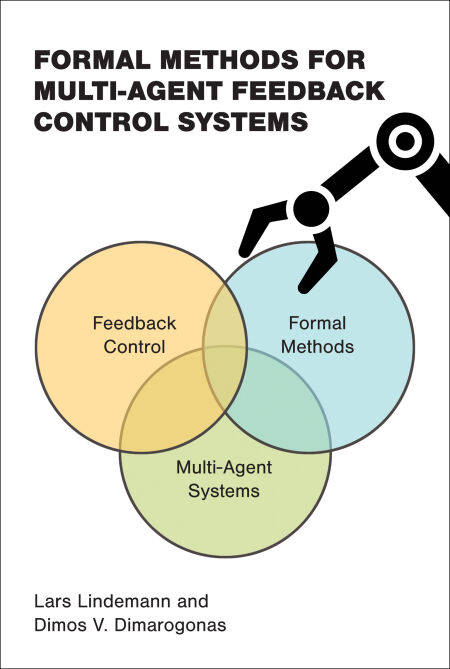
An introduction to formal methods for feedback control of multi-agent systems with safety and performance guarantees.
Multi-agent control systems can accomplish tasks that single-agent systems cannot address, such as aerial surveillance of large areas by a group of drones. In Formal Methods for Multi-Agent Feedback Control Systems, Lars Lindemann and Dimos Dimarogonas provide an accessible introduction to formal methods for feedback control of multi-agent systems. Their book is the first to bridge the gap between formal methods and feedback control for the scalable design of cyber-physical systems. The material covered is intended for scientists, engineers, and students, and no background in formal methods or control theory is required. The authors also highlight future research directions for those working at the intersection of formal methods and control.
In control theory, the goal is to design feedback control laws for dynamical systems that achieve control objectives such as stability or forward invariance of sets. Formal methods, on the other hand, provide verification and design techniques for more complex system specifications using temporal logics. However, their high computational cost limits scaling beyond a small number of agents. Besides scalability, another central challenge is to achieve robustness in the system design. Thus, the authors focus on the design of scalable and robust feedback control algorithms for multi-agent control systems under temporal logic specifications.
Multi-agent control systems can accomplish tasks that single-agent systems cannot address, such as aerial surveillance of large areas by a group of drones. In Formal Methods for Multi-Agent Feedback Control Systems, Lars Lindemann and Dimos Dimarogonas provide an accessible introduction to formal methods for feedback control of multi-agent systems. Their book is the first to bridge the gap between formal methods and feedback control for the scalable design of cyber-physical systems. The material covered is intended for scientists, engineers, and students, and no background in formal methods or control theory is required. The authors also highlight future research directions for those working at the intersection of formal methods and control.
In control theory, the goal is to design feedback control laws for dynamical systems that achieve control objectives such as stability or forward invariance of sets. Formal methods, on the other hand, provide verification and design techniques for more complex system specifications using temporal logics. However, their high computational cost limits scaling beyond a small number of agents. Besides scalability, another central challenge is to achieve robustness in the system design. Thus, the authors focus on the design of scalable and robust feedback control algorithms for multi-agent control systems under temporal logic specifications.
Specificaties
Betrokkenen
- Auteur(s):
- Uitgeverij:
Inhoud
- Aantal bladzijden:
- 312
- Taal:
- Engels
- Reeks:
Eigenschappen
- Productcode (EAN):
- 9780262382809
- Verschijningsdatum:
- 28/04/2025
- Uitvoering:
- E-book
- Beveiligd met:
- Adobe DRM
- Formaat:
- ePub


Alleen bij Standaard Boekhandel
+ 88 punten op je klantenkaart van Standaard Boekhandel
CADEAU


Beoordelingen
We publiceren alleen reviews die voldoen aan de voorwaarden voor reviews. Bekijk onze voorwaarden voor reviews.